Exercising For Breast Cancer.and Solution?

EXERCISING FOR BREAST CANCER.
The diagnosis of breast cancer brings challenges, lots of emotions, time off work, a new routine and a range of side effects. The last component of treatment that an individual is likely to consider is regular exercise, however exercise is an integral part of management of breast cancer during and after treatments have ended. In 2018, COSA, the Clinical Oncology Society of Australia, called for exercise to be embedded as part of standard practice in cancer care and to be viewed as an adjunct therapy that helps counteract the adverse effects of cancer and its treatment. Best practice cancer care also included referral to an exercise professional with experience in cancer care, such as an Accredited Exercise Physiologist.

Regular physical activity will assist with:

» Maintenance of lean muscle mass » Maintenance of Bone Mineral Density (BMD) » Manage and reduce cancer-related fatigue

» Improved mood » Maintaining aerobic conditioning » Manage flexibility and mobility, especially after surgery and reconstructive surgeries » Improve appetite and reduce nausea (a common side effect of chemotherapy)

» Enhanced outcomes during and post-treatment

» Reduction in overall side effects experienced

» Improved sense of being connected and social interaction.

HOW MUCH EXERCISE?

The amount and duration of exercise will depend on the individual, their treatment and ability to engage in regular physical activity. Just remember, something is better than nothing. Overall, the general guidelines for individuals with breast cancer are to engage in 30 minutes of exercise on most (5+) days per week. This can be accumulated in 10 minute blocks throughout the day. The intensity of the exercise is recommended to be moderate. This means a slight increase in breathing rate, heart rate and body temperature.
WHAT TYPE OF EXERCISE?

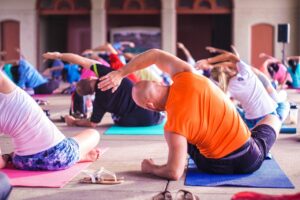
Firstly, find something that you enjoy. Use this time as your time away from all the medical appointments, scans, results and waiting rooms! Any type of exercise is better than none. So maybe try out a few different things and see what feels best for you. It might be a walk with a friend, a yoga or Pilates class, or a weekly session with an Accredited Exercise Physiologist.
WHAT SHOULD I BE CAREFUL OF?
Lymphedema is swelling of the arm or upper limb which can occur in women who have had lymph nodes removed or damaged during surgery. The good news is that exercise and regular movement can reduce your risk of developing lymphoedema as well as managing symptoms for those who do have lymphoedema. Remember, gradual implementation of exercise is key and will assist in your recovery on many levels. Weight gain is very common after diagnosis which can be related to treatment options as well as lack of activity. Regular physical activity will not only help you to manage your weight but also improve your lean muscle mass so that you are able to maintain your strength and function.
MOTIVATION AND WHERE TO START?
» Remember, start small. Set realistic goals for yourself.
» It might help to have an exercise buddy or friend or family member who joins you or just checks in on how you are going.
» Set a reminder on your phone or place a reminder quote on your fridge.
» Keep a diary of how you are feeling. An exercise or mood diary can be satisfying to see you commitment but also provide you with insight on how physical activity is affecting other areas of your life and well-being.
» Research suitable groups and sessions in your local area and community.


WHAT MIGHT BE SOME OF THE BARRIERS AND WHAT SHOULD I DO ABOUT THEM?
Finances It is important you find an exercise option that suits your budget. This will ensure a sustainable approach to physical activity as well as reduce any extra stress you may have relating to finances.
» Opt for the outdoors! It’s free! Try going for a walk or jog in the local park or completing some body weight exercises in the garden.
» Research cost-effective programs in your local community.
Most local councils offer walking groups, tai-chi or yoga programs which are either free or very low cost options. You may be eligible for a rebate from your Private Health Insurance for any sessions provided by an Accredited Exercise Physiologist. This is something to be mindful of when researching suitable providers and locations.
Side Effects of Treatment
Fatigue and nausea are two big side effects experienced by those undergoing cancer treatment. Research shows that by even engaging in a small amount of structured physical activity, these side effects can be lessened and in some case even provide an energy boost. Try and choose a time to exercise which is most comfortable for you. For example, if you are often more fatigued or nauseated in the morning, opt for an afternoon exercise regime.
WHAT SORT OF PROGRAMS MIGHT SUIT ME?
Many Accredited Exercise Physiologists in the community may run or have access to targeted exercise groups for you to try. Some of these programs may also be low-cost options to make access easier for you and those in a similar position.
STRENGTH TRAINING
Good for reducing insulin resistance, increasing metabolic rate, improving body composition (more muscle and less fat tissue) Bodyweight exercises like squats, push-ups, or tricep dips improve the function of insulin in your body, but can also boost your metabolism by building more muscle mass. Don’t worry though; you won’t bulk up unless you’re taking steroids! More muscle simply means burning more calories while exercising, but also throughout the day, even at rest. Combining resistance moves with cardio exercise is the best way to ensure you’re building a lean body, achieving a healthy BMI, and reducing your risk of chronic diseases like type 2 diabetes.


HOLLY’S EXERCISE JOURNEY WITH BREAST CANCER At 31,
Holly was diagnosed with breast cancer. Shortly after her diagnosis, she started chemotherapy treatment and underwent a double mastectomy. Holly shares her exercise journey with us and how sessions with her Accredited Exercise Physiologist made her feel ‘amazing’ and ‘like her old self again’, physically and mentally. Holly encourages everyone going through cancer treatment to be physically active; “to be in control of something is a positive part of recovery that anyone can do.”

How Much Should You Exercise? and its Benefits.

HOW MUCH SHOULD YOU EXERCISE?
In line with Australian physical activity recommendations, it’s recommended that women undertake 150 to 300 minutes (2 ½ to 5 hours) of moderate activity or 75 to 150 minutes (1 ¼ to 2 ½ hours) of vigorous intensity physical activity each week.
This can include:
» biking
» walking
» swimming
» jogging
It’s also recommended to fit in at least two strength sessions every week, and limit long periods of sitting. Understanding exercise intensity is important. A quick way to test your exercise intensity is using the talk test. When exercising, can you:
» Talk comfortably and sing comfortably? You’re probably exercising at a light intensity.
» Talk comfortably but not sing? This is likely to be moderate intensity exercise.
» Neither talk nor sing comfortably? You’re working hard at a vigorous/high intensity.
Consistency is key – try to be physically active on most, if not ALL days. For beginners: start with 10 minutes of light activity, slowly boosting exercise intensity as it becomes easier.


WHO ARE THE EXERCISE PROFESSIONALS?
Accredited Exercise Physiologists (AEP) are qualified allied health professionals that hold a minimum of 4-years of university training. AEPs are equipped to design, deliver and evaluate safe and effective evidence-based exercise interventions to individuals at high risk of developing, or with existing, chronic and complex conditions and injuries, including any conditions for which there is evidence that exercise can improve the client’s clinical status. By speaking with an Accredited Exercise Physiologist who works and specialises in women’s health, they can provide you with a program suitably tailored to your own level of fitness, and assist you with your health or any medical conditions or injuries you may have. To get in contact with your local accredited exercise professional, visit the ESSA website: www.essa.org.au or speak with your GP for a referral to an Accredited Exercise Physiologist.
EXERCISING FOR SAFE WEIGHT LOSS:
In 2011-12, over 2.3 million Australians aged 15 years and over reported to be on a diet to help lose weight or for another health reason. A majority of these Australians were women. Unfortunately, women are also more likely than men to have higher rates of body dissatisfaction, poor body image, engage in riskier health behaviours such as extreme dieting and purging, and report depression and anxiety associated with their weight. We have become a society obsessed with losing weight through extreme measures, fad diets and magic pills, which may be why a majority of weight loss efforts fail long term. Due to these extreme measures, exercise is not typically recommended, yet, exercise has been shown to play a crucial role not only with weight loss but for our overall physical and mental health. Regular physical activity is important for the prevention of chronic diseases, such as cancers and diabetes, and assists with the management of anxiety and depression. Let’s take a closer look on how to make exercise and weight loss a positive experience. Your mindset towards exercise or physical activity is a great determinant towards your success or failure with weight loss. If you consistently see exercise as difficult or as a punishment, then you’re not likely to stick to a plan, and who would if you say you hated it. If you’re a self-confessed non-exerciser, rather than feeling confined to traditional forms of exercise, such as walking/running, the gym or swimming, try other forms! Dancing, horse riding or stand up paddle boarding all require some sort of physical exertion and can be extremely fun. Go out and try something new, you may even make some great workout friends along the way, which will help your weight loss even further! Other ways to improve your relationship towards exercise can be focusing on the positives you receive from it, such as increased moods, confidence, energy, and strength, as well as lowering your risk for chronic diseases. If you’re still finding it difficult to stick to your new exercise plan, see my top 10 tips for some extra help..


TOP 10 TIPS
1. Ask yourself why. If you’ve ever tried to lose weight before there usually comes a moment in time when you ask yourself why you’re doing this. So why is losing weight important to you? What will you be able to do once you lose weight? Is it to have more energy to play with your kids, buy an outfit in a particular shop, or climb stairs without getting puffed? Finding your why will enable you to stick to your plan when the going gets tough.
2. Set small, incremental goals. Sometimes we get overwhelmed by the weight we’d like to lose so it’s always recommended to break down the goal into smaller amounts. Particularly as the recommended weight loss is 0.5-1kg maximum per week.
3. Track your progress. Weight loss progress can seem slow so it’s recommended to take as many measurements as you can to help you stay on track. Many people tend to only use their weight on a scale but you should also take body measurements, photos and perform a fitness test.
4. Keep a food and fitness diary. Many weight loss studies have shown that when people track their food and physical activity throughout the day or week it resulted in higher and more sustainable weight loss. This was thought to be due to a greater awareness.
5. Recruit friends and family. Let’s face it, exercise can be tough, but when you do it with other people it has been shown to increase adherence as no one wants to be the one that cancels.

6. Use incentives. Incentives are a great way to stay on track as you reach milestones. They can range from scheduling a massage, buying a new outfit, or even new exercise gear.
7. Progress not perfection. When you’re first starting out, you can get caught up in trying to do everything perfectly, but sometimes this isn’t sustainable. Instead, focus on positive changes you’ve made; did you cut out your soft drink habit or are you taking the stairs rather than the lift? All of these positive health behavio will help you reach your goal.
8. Plan for failure. Let’s face it, life happens, and when it does it’s best to be prepared. Put out your clothes the night before, pack a healthy lunch, and schedule in your exercise time so you can plan out your week.
9. Action, action, action! Unless you actually move your body you won’t receive the great rewards. Any type of physical activity will help get you to your goal. So if you didn’t make it to the gym today, ask yourself what other activities you can do. Make sure you get up every 1-2 hours and walk around for 5 minutes, take the stairs, park further away, or set a goal of doing 100 squats off your chair throughout the day. Every bit counts! .
10. Seek out the professionals for help. Speak to an exercise professional such as an Accredited Exercise Physiologist on how to kick start your exercise goals. Not only can they provide motivation but they are the experts of exercise and can tailor a plan specific to you making you more likely to stick to it.

Holistic & Mental Wellness. How to Solve ?

Holistic & Mental Wellness:
Why a Mind, Body, and Soul Tune-Up Is Necessary for True Fitness
A single number ruled the fitness discussion for years: burn rate. Intensive workouts, strict diets, and a constant search for a physical ideal were all part of it. We frequently viewed our bodies as separate creatures to our thoughts, counting steps, tracking weight, and pushing them to the limits. However, a significant shift is underway. We are waking awake to a more old, more full truth: you cannot compartmentalize your health.Developing a stronger body is just one part of real, permanent health; another is creating a more flexible, contented, and happy self. This is the basis of the most important health movement of the present day, physical and mental health. It is realizing that your mental, emotional, and physical health—not to mention even your metaphysical connection—are all deeply linked and not just connected.

This is not an alternate, flowery idea. It’s a realistic, scientifically supported method of improving one’s quality of life. Let’s talk about how you can start tuning up your whole being and go over the burn.

The Basis: Comprehending the Mind-Body Dialogue
Your mind and body are always communicating with each other. Consider a period when you had extreme anxiety. Your body reacted to the stress your mind manufactured, producing tense shoulders, sweaty hands, and a pounding heart. Turn it back now. Despite not feeling like it, recall a time when you exercised, such as going for a walk or practicing yoga. Your mind replied to your physical movement with information, less tension, and a feeling of peace.

A complex web of neurotransmitters and hormonal makes this possible. Exercise causes the production of opiates, which are natural pain killers and mood boosters, dopamine, which is a reward chemical, and serotonin levels, which control the state of mind, appetite, and sleep. With a mental picture, you are washing your brain with chemicals that make you feel good.

A comprehensive strategy purposefully makes use of this discussion. It entails asking “How did my workout make me feel?” in addition to “Did my workout burn 500 calories?”

Pillar 1: Use the Correct Movement to Relax Your Mind
Though the “dose” is important, exercise is a potent medication for mental wellness. The outdated “no pain, no gain” mindset may really work against you by causing physical tension that wears you out mentally.

1. Discover Your Joyful Movement: The activity you will perform most often is the finest. Don’t run if you detest it! Burnout is inevitable if you force yourself to do exercises you hate. Instead, explore. As a child, did you like dancing? Take a Zumba class. Do you find tranquility in nature? Take a hike. Enjoy community? Join a team for leisure sports. You are taking care of your emotional health just as much as your physical health when activity seems like enjoyment rather than punishment.

2. Adopt “Fitness Snacking”: You may benefit mentally without a 90-minute workout. “Healthy breaks”—short moments of activity during the day are really beneficial. You may considerably decrease your stress levels and refresh your energy with a 5-minute daily stretching routine, a 10-minute yoga session during your break at work, or a strong 15-minute exercise in the afternoon. With this method, exercise becomes a part of your life and continuous as opposed to a daunting stand-alone endeavor.

3. Don’t Undervalue Gentle Modalities: Exercises like Pilates, Chinese martial arts, and Yoga are powerful exercises for mental and physical health. They effectively enhance the relationship between mind and body through the use of relaxation, exercise, and physical activity. They teach instantaneous mindfulness, reduce the production of cortisol, and increase flexibility and power.

Pillar 2: Fuel Your Brain by Feeding Your Gut
Being your gut’s “second brain” is more than just a catchphrase. The vague nerve, a vast communication superhighway, connects your brain and digestive system directly. Your mood and mental state are greatly influenced by the wide range of neurotransmitters produced by the trillions of bacteria that comprise your gut microbiome.

The Function of the Gut-Brain Axis: An poor gut microbiota is connected to greater incidences of anxiety, sadness, and cognitive fog. On the other hand, the stomach produces 90% of the calming neurotransmitters, such as serotonin and GABA, when it is diversified and healthy.

How to Eat to Support Mental Health:

Make Fiber-Rich Plants a Priority: Prebiotics are foods for your good gut flora and include fruits, vegetables, legumes, and whole grains. It will be grateful to you if you feed them right away.

Incorporate Fermented Foods: To quickly introduce beneficial yeast strains, include natural microbes such as fermented milk products, kimchi, cabbage, kombucha, and dairy.

Keep Yourself Hydrated: Even little hydration can cause distress and decrease ability to think clearly. All processes in biology, such as those in the mind, depend on freshwater.

Observe Food Moods: Take note. After consuming a lot of processed food, do you feel lethargic? After too much sugar, are you anxious? You can determine which meals make you feel your best and which don’t by keeping a simple notebook.

Pillar 3: Control Your Sleep & Recuperation
A stressed-out existence is impossible to out-exercise. Your body cannot heal if your nervous system is in “fight or flight” mode all the time, and your mind will be caught in a vicious cycle of worry. Recovery is where the magic happens—both physically and psychologically.

1. Sleep Is Non-Negotiable: The best holistic treatment is sleep. Your brain processes emotions, organizes memories, and eliminates metabolic waste while you sleep. One of the quickest paths to mood swings, decreased immunity, and poor cognitive performance is chronic sleep deprivation.

Try to get 7–9 hours of good sleep.

Establish a relaxing nighttime routine that includes reading a book, having a warm bath, and avoiding electronics for an hour before bed.Make sure your room is quiet, dark, and chilly.

2. Engage Your “Rest and Digest” System: You need to consciously activate your parasympathetic nerve system to counteract stress.The quickest method for hacking your neurological system is breathwork. For immediate calming, try diaphragmatic breathing or basic box breathing (inhale for 4 counts, hold for 4, expel for 4, hold for 4).

Meditation and Mindfulness: An hour of meditation is not necessary. Your brain may be trained to be less reactive to stress by spending five minutes each day sitting quietly and paying attention to your breathing.

Nature Therapy (“Forest Bathing”): It has been shown that spending time in nature and intentionally using your senses may enhance mood, decrease blood pressure, and lessen the creation of stress hormones.

Pillar 4: Foster Purpose and Connection
Holistic health is more than just oneself. Connection is deeply rooted in human nature. Our physical and mental health are severely strained by feeling isolated and alone.

Social Fitness: Take care of your relationships. Join a group with similar people, having coffee with a friend buddy, or speaking on the phone with a family member all provide to a feeling of support and connection that is important to our health.

Discover Your “Why”: When movement is linked to a goal greater than beauty, it seems more significant. Is having the energy to play with your children your “why”? On your next trip, are you planning to trek a mountain, to effortlessly carry your own groceries as you become older? Making the connection between your healthful behaviors and a more profound goal gives you a strong, long-lasting intrinsic drive.

Bringing Everything Together: A Day in the Life of Holistic Practice
You don’t have to execute everything flawlessly because of this. It all comes down too little, regular integrations.

Morning: Take five minutes moving as opposed to searching. A high-protein, dietary fiber breakfast. Breakfast takes a fifteen-minute stroll outside. A salad full with beautiful vegetables.

Evening: A fun exercise, such as a weightlifting session or dancing class. Putting your phone aside an hour before bed to read. Water consumption throughout the day. breathing deeply while under tension. sending a buddy an SMS.

Holistic health does not aim for perfection. It’s consciousness. It includes giving attention to your physical signals, respecting the requirements of your mental abilities, and realizing that showing affection for a particular part of yourself also takes care of all of it. It is the height of confidence. So, got off the spinning wheel of severe physical activity and excessive diet tracking. Pay carefully. Create an active existence that feels as wonderful on the internal level as it does on the outside by eating your mind and moving your body happily.

Health and Fitness?

Introduction.
Let’s face it, this is how “healthy” really feels. There is a lot of noise and deception in the health and fitness industry. The one moment you’re reading about a strange fruit that destroys body fat as you sleep, the next they’re being advised to run up a mountain at five in the morning. Your social media page is a never-ending scroll of people selling you something they “don’t want you to know,” healthy drinks in ideal lighting, and toned quads.
It takes you out. And if you’re like a great number of people, it leaves you feeling either wildly hopping from one trend to another or so stressed that you simply do absolutely at all. You feel bad about the dressing even if you ordered the salad without it. Counting down the seconds till the end of an exercise you detest, you make yourself go to the gym. That is the purpose of this. Let’s cut out the crap and discuss, in plain English, how to create permanent fitness and health.

Type 1: The Mentality Transition: Your Brain Is Your Most Vital Muscle
We have to talk about what’s happening above before we discuss a single gram or exercise. This serves as the basis for everything. Everything else comes together in without it.

1. Give up the “all or nothing” mindset.
The top dream breaker is this. It goes like this: “Okay, so my diet was destroyed because I already ate a cake.” It would be good to complete the full box and begin over on Monday. Oder, “My whole week has been wasted because I didn’t work out early this morning.” There is zero choice in life. It’s both “poor” nor “imperfect.” There is a continuum. A single cake is just that—a single cookie. It doesn’t take from the healthy meals you’ve had. A skipped exercise is not a disaster; it’s a slip. There is no straight path for moving forward. The trend is loose, untidy, and upward. Accept the uncomfortable.
2. Quit comparing your first chapter to someone else’s twentieth chapter.
Because you’ve been experiencing trouble with the 45-kg tool, feeling weak when you see others lift 250 kg. However, the length of time they have been training is known to you. That person on the road who sped by you with speed? They possibly start right when you are, fighting for air and wondering each choice they ever took.

Competition takes happiness. Your path is unique to you. You can only attempt to be a better version of yourself than you were yesterday. Respect little successes. Walking for ten minutes after stepping up from the couch? It is something to celebrate. Do you choose a piece of fruit to replace a bag of chips? Success. In time, these little wins add up to major shifts.

3. Determine Your “Why.”
“I want to lose weight” is a good aim, but it’s often little to keep you going when your drive decreases—but it will. Look further.

Some of you want to reduce weight, but why?

Is it so you can play with your children longer without feeling tired yourself?

Is it to be powerful and safe in your own body?

Is it to have unlimited freedom of motion to find out?

Is it for mental health and emotional management?

An emotional and powerful “why” serves as your base. On a cold morning when you would like to press go to sleep, it is what will get you out of bed. Put it in writing. Place it on the shelf above the fridge. Do not forget it.

Type 2: Nutrition: It’s Just Food, Not a Diet
The term “diet” means something temporary, a time of pain you face in order reach a goal. Let’s reword it. This has to do with what you eat. For a period.

1. Consider addition rather than subtraction.
Focus on all the wonderful things you get to add and not all the things you “can’t” have. Is it possible to increase your daily allowance of vegetables by one serving? Do you mind having another glass of water? Is it possible to include a healthy animal protein into your lunch?

You will automatically begin to push away fewer high in nutrients items without feeling limited when you focus on adding enjoyable, healthy foods. You are just too full of wonderful things for all of the other things.

2. Learn the Fundamentals: The Plate Method.
A detailed food plan is not needed. For most of meals, just picture your plate:
Fruit or vegetables make up half of the plate. The key is color. Eat a lot of oranges, purples, reds, and greens. They are high in antioxidants, dietary fiber, and vitamins.
Lean meat makes up half of the plate. This is your Greek yogurt, beans or lentils, tofu, fish, eggs, or chicken. It is required for many body processes, including repair of muscles and full.
Complex carbs Make Up 25% of the Plate. Consider grain varieties such as sweet potatoes, quinoa, brown rice, or oats. As opposed to giving you a sugar feeling, they provide you steady energy.
This is a great mental model to make sure you’re receiving a balanced intake of substances, but it’s not an exact rule for every food.
3. Don’t be afraid of food.
The enemy of health is not food. The challenger is not fat. When eaten in moderation, sugar is not bad for you. A poisonous connection with eating is created when whole food categories are despised. In addition to being healthy, food is also a source of pleasure, culture, and connection.
At a celebration, that piece of birthday cake? Take it. Have fun. Without feeling shameful, enjoy each bite. Your health is not defined by a single meal, snack, or eating day. What counts is the steady trend over many weeks and months. Beer, chocolate, and pizza all have a place in a healthy lifestyle. Balance, not perfection, is the key.

4. Drink plenty of water.
The human body needs water for nearly all function. It assists in carrying food, washes away trash, soothes muscles, and controls body temperature. We frequently mistake hunger with food.
Make it a point to stay hydrated all day. Not a fan of plain water? Add fruits, tomato, mint, or lemon to it. Tea made with flowers also works! Wait fifteen minutes after drinking a large glass of water if you feel sleepy or hungry. You may be taken away.
Type 3: Moving Discover What Does Not Feel Like a Task.
Working out should not serve as a way to make it up for your diet. It is a celebration of the human body’s powers. It is a means of feeling powerful, effective, and inspired.


The Secret Bases: Sleep & Stress
It is impossible to exercise or overcome not enough sleep and excessive tension.
Make sleep (7-9 hours) a priority:
As you sleep, your body recovers self. Withdrawal of it affects feelings of hunger, lowers drive, and slows repair. Create a relaxing nighttime custom and a cold, dark, cell-free sleep cave.

2. Handle Stress:
Extended stress causes the production of cortisol to rise, which promotes the development of body fat and causes breakdown of muscle. Find the means for stress comfort:
Mindfulness: Breath for five minutes.
Nature: A walk outdoors without a phone.
A Hobby: Get yourself in something you love.
Link: Speak with a buddy.

Combining Everything:

Stop trying to achieve too much at once. Loss results from it.

Select ONE little item. (e.g., increase water drinking).
Become skilled. Add one extra little activity (like a 15-minute walk) to your routine the following week.
Create habits, not a quick fix. This is not a 12-week schedule; it is a lifestyle.
Serve yourself with kindness. There will be difficult weeks. Quality, not excellence, is the goal. You are a person who needs to be taken care of, not a problem that has to be solved.