The Science Behind the Mini Massager 

The human body is covered in a layer of connective tissue called fascia. Think of fascia like a thin, internal plastic wrap that holds your muscles together. When you sit at a desk all day, or when you lift heavy weights, that fascia can get “stuck” or tight. This creates what we commonly call “knots.”

The mini massager uses a high-speed motor to drive the attachment head back and forth. This creates a mechanical wave that travels deep into the muscle fibers.

This does three main things:Neuromuscular Inhibition: It confuses the nervous system. By hitting the muscle so fast, the brain stops sending “pain” signals and instead sends “relax” signals.

Vasodilation: The physical pounding forces blood to rush to the area. Blood carries oxygen and nutrients, which are the building blocks for repairing torn muscle fibers.

Myofascial Release: It helps “unstick” the fascia from the muscle, allowing you to move more freely and with a better range of motion.

The Benefits: Why People Love These (Faide)

1. Post-Workout Recovery (DOMS)Delayed Onset Muscle Soreness (DOMS) is that pain you feel two days after going to the gym. Using this mini massager for just 5 to 10 minutes on your legs or arms after a workout can significantly reduce that “stiff” feeling the next day. It flushes out lactic acid and metabolic waste that builds up during exercise.

2. Sedentary Lifestyle ReliefIf you spend 8 hours a day looking at a computer or a phone, your neck and upper trapezius muscles are under constant tension. This leads to “tension headaches.” A mini massager is perfect for the fleshy part of the shoulders to release that built-up pressure before it turns into a migraine.

3. Portability and Convenience.    Unlike the giant, heavy massage guns used by professional athletes, the “Mini” version is light enough to hold with one hand without your wrist getting tired. You can keep it in a backpack, a car glove box, or an office drawer. It’s “stealthy” relief.

4. Improved Sleep.     When your muscles are relaxed, your nervous system shifts from “Fight or Flight” mode into “Rest and Digest” mode. Using the massager on your feet or calves about 30 minutes before bed can help lower your cortisol levels, making it easier to fall asleep.

The Dangers: What No One Tells You (Noksan)While these tools are great, they are power tools for the body. If you use them incorrectly, you can actually cause more harm than good.

1. Bone and Joint Damage.  The motor in these minis is surprisingly strong. If the hard plastic head hits a bone—like your spine, your kneecap, or your ankle bone—it doesn’t just massage; it chips away. At best, you’ll get a nasty bruise. At worst, you can cause a stress fracture or damage the periosteum (the thin layer of tissue covering your bones).

2. Nerve Sensitivity.   There are certain “danger zones” on the human body where nerves sit very close to the skin. For example, the inside of your elbow (the funny bone area) or the “thoracic outlet” near your collarbone. If you hold a massager on these spots for too long, you can cause nerve impingement, leading to temporary numbness, tingling, or even a loss of grip strength.

3. Blood Clot Risks.  This is a serious one. If a person has a history of DVT (Deep Vein Thrombosis) or blood clots, using a percussive massager on the legs can actually dislodge a clot and send it into the bloodstream. If you have any vascular issues, you must consult a doctor before using one of these.

4. Over-Massaging (The 2-Minute Rule)More is NOT better. If you stay on one single spot for more than 2 or 3 minutes, the skin will become red and irritated, and you might actually bruise the muscle tissue itself. You are looking for a “flush,” not a “crush.

“Step-by-Step Usage Guide (Astamalat).  To get the most out of your device without hurting yourself, follow this professional-style routine:

The “Turn On” Rule: Always turn the massager on before you touch it to your skin. If you turn it on while it’s pressed against you, the sudden kickback can be painful or startling.

The “Float” Technique: Do not push the massager into your body with all your strength. Instead, let the device “float” on top of the muscle. Let the motor’s own weight and speed do the work. If the motor starts making a “stalling” sound, you are pressing way too hard.

Find the Trigger Point: Move the device slowly (about an inch per second) until you find a spot that feels particularly tight or “tender-good.” Stay on that spot for 15-30 seconds, taking deep breaths.

Angle Matters: Try to hold the massager at a 45-degree angle rather than a 90-degree angle. This creates a “scraping” sensation that is often more comfortable for sensitive areas like the forearms or the sides of the neck.

Front of the Neck.    This is where your carotid artery and jugular vein are. Pressure here can cause dizziness or even a stroke in extreme cases.

The Spine.     Hitting the vertebrae directly can cause neurological issues. Stay at least 2 inches away from the center of the back.

The Abdomen.  You have soft organs here (liver, kidneys, spleen). There is no muscle “shield” to protect them from the percussion.

Groin/Armpits.   These areas are full of lymph nodes and major nerves. High-vibration here is painful and serves no recovery purpose.

Maintenance and Care

Since this is an electronic device, you want it to last.

Keep it Dry: Never use massage oils or lotions directly with the massager head. The liquid can seep into the motor housing and short-circuit the battery. If you want to use oil, apply it after the massage.

Charging Habits: Don’t leave it plugged in overnight. Most mini massagers use Lithium-ion batteries. Overcharging them can shorten the battery life or lead to overheating.

Cleaning: After a sweaty gym session, wipe the attachment head with a simple alcohol wipe. Bacteria can grow on the foam or plastic heads if left uncleaned.
Conclusion.
This mini massager is a fantastic tool for the “modern human.” Whether you are an athlete or someone who just feels stiff from sitting in a chair, it provides professional-level relief for a fraction of the cost of a real massage therapist.However, treat it with respect. It is a tool for recovery, not a toy. If you stick to the “meaty” parts of your muscles and keep your sessions short and sweet, your body will feel significantly more mobile and less painful within just a few days of use.

A Deep Dive into the SERVO 15SE Mini Smartphone.

The Tiny Tech Revolution: A Deep Dive into the SERVO 15SE Mini Smartphone In an era where smartphones are getting so big they barely fit in a pocket let alone a single hand there’s a small, rebellious corner of the tech world moving in the opposite direction. Enter the SERVO 15SE. It looks like someone hit an iPhone with a “shrink ray,” but don’t let the cute exterior fool you. This is a fully functional Android device designed for those who want to disconnect from “phablet” culture without actually losing touch with the world. But then, something like the SERVO 15SE comes along and flips the script. I’m talking about a phone that is literally the size of a credit card but acts like a flagship.
1. The “Digital Detox” Crowd We’ve all been there—scrolling through TikTok for three hours when we only meant to check the time. The 15SE is the perfect “weekend phone.” It has WhatsApp so your family can reach you, and Google Maps so you don’t get lost, but the screen is just small enough that you won’t feel tempted to mindlessly scroll for hours. It helps you stay present.
2. Fitness Enthusiasts and Runners Standard phones today are heavy. They bounce around in your pocket or require bulky armbands. The SERVO 15SE is so light you’ll forget it’s there. Pair it with some Bluetooth earbuds, and you have a perfect, ultra-lightweight music player that can still make emergency calls. Toss it in your pocket, connect your Bluetooth earbuds, and you have your music and emergency calls ready to go.
3. The “First Phone” for Kids Parents often struggle with giving their kids a $1,000 smartphone. The 15SE is a great middle ground. It’s affordable, fits perfectly in smaller hands, and provides all the necessary safety features (GPS, calling, messaging) without being a massive platform for high-end mobile gaming distractions.
4.The “First Phone” for Kids Parents often struggle with giving a child a massive, expensive smartphone. The 15SE is a great middle ground. It’s affordable, fits perfectly in small hands, and runs the Play Store so you can install tracking and communication apps without the bulk.
Battery Life: The image promises about 4-7 hours of daily usage. This isn’t a phone you’re going to spend 10 hours a day scrolling on (and that might be a good thing).
Final Verdict: Is it worth it? The SERVO 15SE isn’t trying to replace your main smartphone. It’s trying to be your helper. It’s a backup phone for emergencies, a sleek device for a night out when you don’t want a “brick” in your suit pocket, and a way to reclaim your focus from the digital world. For the price of a few fancy dinners, you get a fully functional, dual-SIM Android device that fits in that tiny “watch pocket” of your jeans. In a world where “bigger is better” is the golden rule, the SERVO 15SE is a refreshing reminder that sometimes, the best things really do come in small packages. It’s a specialized tool. It’s for the person who wants to reclaim their focus, the athlete who wants to move light, and the tech lover who just thinks tiny gadgets are cool.

A Deep Dive Radtel RT-950 PRO.

Let’s dive into the details—human to human—to see if these “oddballs” actually deserve a spot in your gear bag.
Part 1: The SERVO 15SE — The Mini Marvel
If you’ve ever looked at your $1,200 “Pro Max” phone and thought, “I just want to go for a run without a brick slapping against my leg,” the SERVO 15SE is your answer.
Design and First Impressions
The first thing you’ll notice is the “iPhone” aesthetic. It has the flat edges and the iconic triple-camera housing on the back. But then you realize it’s only 3.48 inches tall. It’s basically a credit card with a screen.
Despite its tiny size, it doesn’t feel cheap. It has a surprising heft to it that makes it feel like a real piece of tech rather than a toy. It fits into that tiny “coin pocket” in your jeans—you know, the one you never use? Yeah, that one.
Under the Hood (The Nitty Gritty)
• The Screen: A 3.0-inch HD display. It’s surprisingly sharp for its size. You can watch YouTube or scroll through Instagram, but honestly, your eyes might give up before the battery does.
• Performance: It runs on Android 8.1 with a quad-core processor and 2GB of RAM. Don’t expect to play high-end games, but for WhatsApp, Spotify, and basic browsing, it’s surprisingly snappy.
• Storage: You get 16GB, which is enough for your essential apps and a decent offline music playlist.
• Connectivity: It’s a 3G device with Dual SIM support. This is the “killer feature” for travelers. You can keep your main phone safe in the hotel and use this for local calls and navigation.
The “Human” Use Case
Who is this actually for?
1. The Digital Detoxer: If you spend too much time scrolling, this phone is your rehab. It has everything you need (maps, calls, texts) but the small screen discourages you from wasting hours on TikTok.
2. The Runner/Gym Rat: Pair this with Bluetooth earbuds and you have the world’s most capable MP3 player that can also call an Uber if you twist your ankle.
3. The Kids’ First Phone: It fits in their hands, it’s affordable, and it keeps them connected without the distractions of a massive gaming device.
Part 2: The Radtel RT-950 PRO — The Survivalist’s Dream
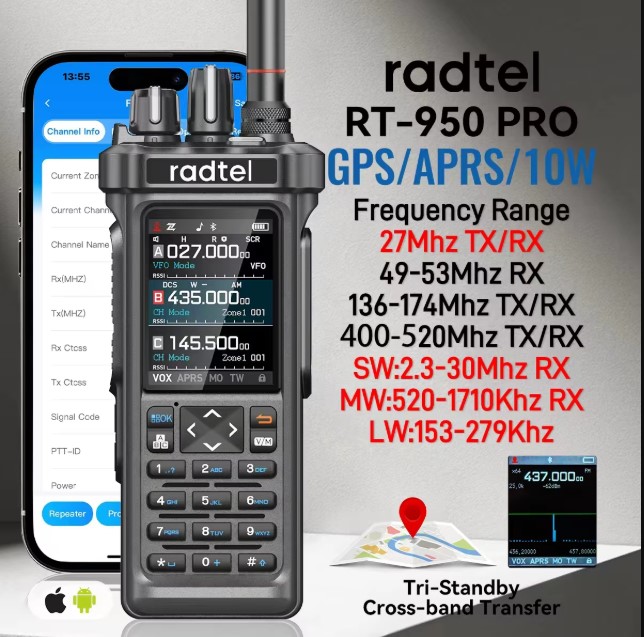
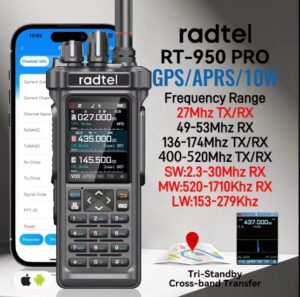
Switching gears entirely, we have the Radtel RT-950 PRO. If the SERVO is a sleek city car, the Radtel is an armored 4×4. This is a 10W high-power handheld radio designed for people who go where cell service dies.
Why It’s a Powerhouse
This isn’t your average “over-and-out” walkie-talkie. This is a Ham Radio enthusiast’s playground.
• 10W Output: Most cheap radios are 5W or less. That extra 10W “oomph” means your signal can travel further through trees, hills, and buildings.
• GPS & APRS: This is huge. It has built-in GPS that can send your coordinates over the radio waves (APRS). If you’re hiking and get lost, other radio operators can actually see your location on a map.
• Frequency Range: This thing is a “Swiss Army Knife” of frequencies. It can transmit on 27MHz (CB Radio), VHF, and UHF. It can even listen to Aviation (Airband), Shortwave, and even FM/AM radio.
Features That Actually Matter
• Bluetooth Programming: Historically, programming a radio was a nightmare involving old cables and confusing software. The RT-950 PRO lets you program frequencies directly from your phone via Bluetooth. It’s a game-changer for convenience.
• Tri-Standby: You can monitor three different channels at the same time. Great for staying in touch with your group while also keeping an ear on emergency weather channels.
• The Build: It’s a “brick” in the best way possible. It feels rugged, the buttons have a satisfying click, and the color screen is actually readable in the sun.
Comparison: Small vs. Strong
Feature SERVO 15SE Radtel RT-950 PRO
Primary Goal Portability / Minimalism Range / Communication Power
System Android 8.1 Custom Radio Firmware
Best For Gym, Kids, Secondary Phone Hiking, Emergency Prep, Ham Radio
Connectivity 3G, WiFi, Bluetooth VHF/UHF, CB, GPS/APRS
Battery Life 4-7 Hours (Usage) Multiple Days (Standby)
The Verdict: Which One Should You Buy?
If you find yourself constantly distracted by your massive smartphone and want to “shrink” your digital life, the SERVO 15SE is a charming, functional way to do it. It’s practical enough to be useful but small enough to stay out of the way.
However, if your idea of a good time is being 20 miles away from the nearest cell tower, the Radtel RT-950 PRO is the insurance policy you need. It’s a professional-grade tool that offers serious communication power for the price of a mid-range toy.
Technology shouldn’t always be “one size fits all.” Sometimes, the best tech is the stuff that fits perfectly into the specific, weird corners of our lives—whether that’s a tiny pocket or a remote mountain peak.
Why would you actually use this? Let’s be real: 
you’re not going to watch a 3-hour movie on a 3-inch screen. But that’s the point. This is the ultimate “Digital Detox” phone. It gives you the 4-7 hours of daily usage you need for essentials without the temptation to scroll through social media for half a day. It’s also the perfect gym or running buddy—it’s so light you’ll forget it’s in your pocket.
Part 2: The Radtel RT-950 PRO — The Adventurer’s Lifeline If the SERVO is about being small and sleek, the Radtel RT-950 PRO is about being powerful and rugged. This isn’t just a “walkie-talkie”; it’s a high-performance communication tool for people who go where cell towers don’t exist. The Technical Muscle This radio is a beast for anyone into ham radio or extreme outdoor sports: Extreme Power: It boasts a 10W output, giving you significantly more range than standard consumer radios. Frequency Coverage: It’s incredibly versatile, covering everything from 27Mhz (CB Radio) to 400-520Mhz (UHF). It even receives Shortwave (SW), Medium Wave (MW), and Longwave (LW) signals.
The Verdict: Two Different Worlds It’s fascinating to see these two side-by-side. On one hand, you have the SERVO 15SE, which tries to make modern tech as unobtrusive and “out of the way” as possible. On the other, you have the Radtel RT-950 PRO, which embraces raw power and technical complexity to ensure you’re never truly lost. Go for the SERVO 15SE if you want to reclaim your focus, need a tiny backup phone for travel, or want the cutest conversation starter in tech. Go for the Radtel RT-950 PRO if your adventures take you where there is no “bar” of service and you need a rugged, 10W powerhouse to stay safe.
FLASHFORGE AD5X 3d Printer Multi-color Printing Intelligent Filament System.

That image is of the Flashforge Adventurer 5M Pro (labeled here as the AD5X), a machine that has been making some serious waves in the 3D printing community.If you’re tired of 3D printers that require a degree in mechanical engineering just to get a decent first layer, this post is for you. Let’s dive into why this “black box” is becoming a favorite for both hobbyists and professionals.

Buy Now.

The Flashforge AD5X: Speed Meets SimplicityFor a long time, 3D printing was slow. You’d start a print, go to sleep, wake up, and hope it didn’t turn into a “spaghetti monster” overnight. The Adventurer 5M series changes that narrative. It’s built for people who want to create, not just tinker with their tools.

1. Speed That Actually MattersWe’ve entered the era of high-speed printing. The AD5X boasts speeds up to 600mm/s. To put that in perspective, older printers usually hummed along at 50mm/s. You’re looking at finishing projects in hours rather than days. It uses a CoreXY structure, which is basically the “sports car” chassis of the printing world—stable, fast, and precise.

2. The “One-Tap” SetupThe biggest headache in 3D printing is “bed leveling”—making sure the nozzle is perfectly distanced from the build plate. The AD5X features full-auto leveling. You press a button, the machine clicks and taps around for a few minutes, and you’re ready to go. No turning knobs, no sliding pieces of paper under the nozzle, no frustration.

3. Safety and Clean AirOne thing people often forget is that melting plastic can smell. If you’re printing in a small room or a classroom, you don’t want to breathe that in. This machine is fully enclosed and features a HEPA and Activated Carbon filter system. It captures 99% of particles and odors, making it one of the “cleanest” desktop printers out there.

Tech Specs at a GlanceFeatureSpecificationMax Speed600 mm/sBuild Volume220 x 220 x 220 mmNozzle TempUp to 280°C (Handles PLA, PETG, ABS, ASA)Filament DetectionYes (Pauses if you run out)CameraBuilt-in for remote monitoring Most tech reviews focus on the “bits and bytes,” but here’s why this actually matters to you:

Quick-Swap Nozzles: If your nozzle gets a clog (it happens to the best of us), you don’t need tools. You can literally pop the nozzle out with your fingers in 3 seconds and click a new one in.Quiet Mode: Even though it’s a powerhouse, it’s surprisingly quiet. You can have it running in the corner of your office without feeling like you’re sitting next to a jet engine.Multi-Filament Ready: As you can see in the photo, it’s designed to handle multiple spools easily, allowing you to switch between colors or materials like the pink and orange shown.The VerdictThe Flashforge AD5X (Adventurer 5M Pro) isn’t just another gadget; it’s a tool that stays out of your way. Whether you’re making custom toys, replacement parts for your home, or prototypes for a business, it handles the “math” so you can focus on the “art.”It’s fast, it’s clean, and most importantly, it’s reliable.

1. The “Out of the Box” Experience
Most 3D printers come as a kit of parts that looks like a complicated IKEA project. This one is different. It’s basically “Plug and Play.” You take it out of the box, remove some foam, plug it in, and it walks you through a setup wizard on the touchscreen. Within 20 minutes, you’re usually printing your first “test boat” (we call it a Benchy).

2. The Magic of the Nozzle
In the 3D printing world, “clogs” are the enemy. Usually, fixing a clog involves wrenches, burns, and a lot of swearing. With the AD5X, the nozzle is a “quick-release” design. You press two tabs, and the whole silver tip pops out. If you want to switch from printing tiny, detailed jewelry to a big, chunky flower pot, you just swap the tip in seconds. No tools required.

3. Dealing with the “Smell”As I mentioned before, this machine is an “enclosed” printer. Because the door stays shut, it keeps the heat inside (which helps the plastic stick together better) and keeps the fumes away from your nose.

The “Hobbyist” Perspective: You can print in the same room where you sleep or work without getting a headache from the melting plastic smell.

The “Parent/Teacher” Perspective: Curious fingers can’t touch the hot parts because it’s a locked box.

4. The “Brain” (The Screen and App)
The screen on the front feels like a smartphone. It shows you a little picture of what you’re printing and how much time is left.

16pcs Professional Nail Clippers and Cuticle Nippers Set.

This isn’t just a few clippers thrown together. This set is divided into three main categories: facial care, hand care, and foot care.

  1. The Heavy Hitters: Nail & Toenail Clippers

The kit features three different sizes of clippers. Why three? Because using the same small clipper for your tough thumbnails and delicate fingernails is a recipe for a bad trim.

  • Large Clipper: Built with more leverage for those thicker toenails.
  • Medium Clipper: Your everyday go-to for fingernails.
  • Diagonal Clipper: This is the unsung hero. It’s angled specifically to get into the corners of your nails to prevent ingrown or to snip off a hangnail without tearing the skin.
  1. Precision Tools: Cuticle Nippers & Scissors

If you’ve ever tried to trim a cuticle with a regular clipper, you know the pain of “the nick.” The professional-grade cuticle nipper in this set allows for a high degree of precision. It’s spring-loaded, which means you have total control. Pair that with the fine-tipped grooming scissors perfect for trimming unruly eyebrows or nose hairs and you’ve got a full salon setup in the palm of your hand.

  1. Facial & Detail Tools

This is where the kit goes above and beyond. You’ll find:

  • Tweezers: Sturdy, slanted tips that actually grip the hair instead of just sliding off it.
  • Ear Picks: Two different styles for gentle cleaning.
  • Acne Needles/Loop Extractors: For those who know how to handle a blemish properly without causing scarring.
  1. Smoothing & Finishing

A nail isn’t finished until it’s smooth. The kit includes a high-grit metal file that doesn’t wear down like those disposable emery boards. There are also various “pushers” and “shovels” used to clean under the nail bed and push back cuticles, giving you that clean, elongated nail look.

  1. The Face Savers It’s not just about nails. This kit handles the “above the neck” stuff too: Tweezers that actually work: We’ve all used those cheap tweezers that just slide off the hair. These have a solid grip.

The Beauty Scissors: Perfect for trimming a mustache or those wild eyebrow hairs.

Ear Picks: It comes with two styles (scoop and spiral) for a much safer way to clean your ears than jamming a Q-tip in there.

The Big Guy: This is for those stubborn toenails that regular clippers just bend against. It’s got the leverage to get the job done without you breaking a sweat.

The Standard Clipper: Your everyday tool for fingernails.

The Angled/Diagonal Clipper: This is the secret weapon. If you’ve ever had an ingrown nail or a painful hangnail, this angled edge lets you snip it right at the source without tearing your skin.

Why Quality Matters (And Why Your Skin Will Thank You)

A lot of cheap kits use low-grade metals that rust after two months or, worse, get dull. A dull blade doesn’t “cut” your nail; it crushes it. This leads to splitting, peeling, and jagged edges.

The tools in this set are crafted from stainless steel with a matte finish. This provides a better grip (no more clippers flying out of your hand across the bathroom) and ensures the blades stay sharp for years. Plus, the matte coating is much easier to sanitize—a quick wipe with some rubbing alcohol and you’re good to go.

The “Human” Benefit: Why You Need This

Beyond the technical specs, there’s a psychological benefit to owning a kit like this. There is a specific kind of “adulting” satisfaction that comes from having a dedicated place for your tools.

Instead of frantic searching, you have a ritual. Sunday night rolls around, you grab your kit, and you take ten minutes to reset. It’s self-care that isn’t fluffy or over-the-top—it’s just practical maintenance that makes you feel more confident on Monday morning.

The Perfect Gift?

The Clippers: There are three different ones. A big one for those tough toenails, a medium one for your fingers, and an angled one. That angled one is a life-saver for getting into the corners of your nails without hurting yourself.

The Face Stuff: It’s got a solid pair of tweezers (that actually grip the hair!), tiny scissors for trimming eyebrows or a mustache, and even some ear picks.

The Extras: It also has tools for clearing out blackheads or pushing back your cuticles. If you’ve ever wanted your hands to look like you just came from a professional salon, these are the tools you need.

Final Thoughts

At the end of the day, grooming is about more than just looking good; it’s about hygiene and health. Properly trimmed nails and clean skin prevent infections and keep you feeling sharp. This 16-piece set takes the guesswork out of it.

It’s sleek, it’s sharp (literally), and it’s organized. Stop settling for dull, mismatched tools and give your grooming routine the upgrade it deserves. Your hands and your sanity will thank you.

For BUY

Understand the development of Fashion Industry in Pakistan.

Understand the development of Fashion Industry in Pakistan.
Pakistan is the world’s 4th largest producer and 3rd largest consumer of cotton. Because of its plentiful, indigenous cotton supply, the textile industry is central to the Pakistani economy and is both a source of employment and a source of exports. Pakistan’s industrialization began in the 1950s with the textile industry at its center. The Textile and Clothing Industry has been the main driver of the economy for the last 50 years in terms of foreign currency earnings and jobs creation. The Textile and Clothing Industry will continue to be an important engine for future growth of the economy; there is no alternative industry or service sector that has the potential to benefit the economy with foreign currency earnings and new job creation. Pakistani fashion industry has great potential which can earn huge foreign exchange through export of fashion industry products if it succeeds to catch the attention of western buyers. These views were expressed by the head of Italian delegation Ms Stella Maria Novarino, Ms Diana Battaggia and UNIDO representatives speaking at a moot here at the Lahore Chamber of Commerce and Industry (LCCI). They said the world was going to other regional countries to buy handmade embroidery and products for fashion industry despite the fact that Pakistan has far better expertise. Members of Italian UNIDO delegation Ms Danielle Doujour, Ms Elisabetta Latanzio Illy, Federico Barassi, Dino Fortunato also spoke on the occasion. LCCI Senior Vice President Khawaja Shahzad Nasir, Vice President Faheem-ur-Rehman Saigal, Convener LCCI Standing Committee on Women Business Development AasiaSaail Khan represented the business community besides veteran businessman Rehmatullah Javeed. Ms Stella Maria Novarino said that all those women are not just workers but artists who are doing embroidery, stitching and other related works. “We also want to change the perception of Pakistan in the world through Pakistani finest quality work and art and want to highlight the talent of Pakistani women that is fit for international fashion Industry”, She added. She said that Pakistani women entrepreneurs have everything that Italian Fashion Company needs. There is no reason not to work with them. Faheem-ur-Rehman Saigal said that fashion industry of Pakistan can get a good share from the international fashion market worth billions of dollars. He said that from 220 million population of Pakistan, women comprise of more than 50 percent of it. Through introducing new projects, a large number of populations can be benefitted and contribute in national economy. He said that Pakistan’s Fashion designing and clothing industry has become an important dimension for national economy because of its export potential. He said that decision makers should realis its significance in view of its huge potential for future expansion and give all possible facilities.
Fabric Scissors: This kind of scissor is a bit heavy than a paper scissors. Scissors also have a long blade which is ideal for cutting fabricseven for cutting several layers of material at the same time.
Paper Scissors: This kind of scissor is lighter in weight than fabric scissor. This scissor should strictly be used for cutting paper because changing the material for cutting can damage the blade.
Beauty sector:
Beauty sector involves self-adornment products like makeup, cosmetics related to skin, hair and other related accessories. Recent years have witnessed a rapid increase in peoples’ inclination towards using such products for personal grooming. At the same time this sector has made a profound place in fashion industry. Colour Theory Color theory is a set of rules that combines creativity and science.


Color theory sets the fundamental guidelines around color combinations and harmony. Designers and artists rely on color theory to make the correct choices for their projects but they are not the only ones who use it. Most people unknowingly make everyday decisions based on color theory and color harmony. Understanding the guidelines of color theory can help you in so many areas of life, from your business to your clothes.
Importance of Colour Theory in drawing and Design.
We live in a highly visual world and it is impossible to master the art of visual communication without a good grasp of color theory. The colors in your design need to be purposeful and have meaning in their use. Color is helpful in communicating your message because it draws attention, sets the tone of the message, and guides the eye where it needs to go. It presents a sense of direction and recognition that people can identify and relate to. Colours are everywhere. In our daily lives, we are constantly surrounded by colours. These colours can influence our emotions i.e. how we feel about Color theory is a body of practical guidance to color mixing and the visual impacts of specific color combinations. Do You Know? Interesting Information Your eye can see different colors because a part of your eye called the retina is sensitive to different wavelengths of light. someone. Marketers have been using the psychology of colors for decades and often draw on them to gain an emotional response from the customer.

Scope of Fashion designing on domestic level.

Scope of Fashion designing on domestic level.
Fashion designing is the science of geometry, color and drapery all rolled into one. It is associated with creating designs for menswear, women wear, teen fashion wear and extends to accessories like jewelry, and footwear also. Fashion designing is an intellectually satisfying and lucrative profession today. As the domestic demand for ready to wear increase, the fashion industry today pivots on the evolving dynamism and energy of the international design world. Creative and innovative Fashion Designers rise to become Global Brand Icons, Media Personalities, Industry Stalwarts or ultimately, Celebrated Images symbolizing the remarkable look, feel and attributes to the era. The fashion industry is a product of the modern age. Prior to the mid-19th century, virtually all clothing was handmade for individuals, either as home production or on order from dressmakers and tailors. By the beginning of the 20th century,with the rise of new technologies such as the sewing machine, the rise of global capitalism and the development of the factory system of production, and the proliferation of retail outlets such as department stores, clothing had increasingly come to be massproduced in standard sizes and sold at fixed prices. Although the fashion industry developed first in Europe and America, today it is an international and highly globalized industry, with clothing often designed in one country, manufactured in another, and sold in a third.
 • Fashion Designing as a field of study: 
                                                                           Fashion Designing is one of the upcoming career options in today’s world and it is becoming famous day by day among the people with creative minds. It is glamorous, appealing, and exciting career option. With this degree students have number of choices in front of them. The fashion designers have varied options including designing, research, cloth production, textile designing, etc.
• Who Is a Fashion Designer?
A fashion designer is a person who studies fashion trends, sketches designs, picks fabrics and oversees the general production of clothing and accessories. Most people often mistaken tailoring/dress making to fashion designing, although they work hand in hand, there is a significant difference between them.
• Skills Required to Become a Fashion Designer 
 Creative Skills
 Good eye for materials
Business skills O
 Strong visualization skills
 Information about current fashion trends
 Drawing and sketching skills
Soft skills
• Product promoters: 
                          There are many other options as well for instance you can also work with Film production units as TV/Film fashion program producers/costume designers etc. Invite guest speaker from garment industry to address the students to highlight scope and importance of Fashion.
What Is Pret-A-Porter Exactly.
                                                          Pret-a-Porter fashion, also known as ready – to-wear fashion, describes the ready -made, ie not tailor -made, fashion collections of designers and labels. Ready -made fashion is one that we find in retail in various, fixed. sizes on the shelves. the designer’s Pret-a-Porter collections are admired and celebrated. For the designers themselves, the Pret-a-Porter collections are extremely important in addition to haute couture, because the ready-to-wear fashion boosts the marketing of designers enormously.
3.2Haute Couture:
Haute couture is defined as the high end or luxurious fashion that majorly fulfills the demands of “high society” of fashion collections by designers. The term comes from France, Haute means high end and couture means fashionand refers to the upscale designs of fashion designers from the top tier. The French fashion association sets rules and specifications so that the ranks of Couturiers remain exclusive.
4. Evolution of Fashion 
4.1 Know the evolution of Fashion (mid 80’s – till date)
                                                         Fashion is a universal subject, a language understood and spoken by many. When we look back over the last 100 years, the change and influence fashion has seen has been exponential. Decade after decade, new trends have been introduced, themselves heavily influenced by pop culture, political attitudes and inspiring style icons of the time. It is a mode of expression for so many and considered a necessity by others. To be ‘fashionable’ was very much associated with wealth in bygone years but as we entered into the glittering Great Gatsby era of the 1920s, fashion became liberated as Coco Chanel took to the throne (in a fashion sense, of course.) She popularized so many pivotal fashion trends that we still wear today including the little black dress, espadrilles and costume jeweler but she was also a driving force behind this liberation movement, an advocate for casual dressing as corsets were removed and trousers for women became the new wardrobe staple. By the 1950s, the French designer, Christian Dior, had introduced us to one of fashion’s most widely-worn trends – the pencil skirt. A popular choice for the First Lady of the time, Jackie Kennedy.In what became known as the ‘rebellious era’, the 1960s was a great contrast to previous decades. It was a time of great upheaval, both politically and creatively and is synonymous with a much shorter hemline as governed by British designer, Mary Quant presented and her mini skirt. Mod fashion also came into play, with bold geometric shapes, bright primary colours and psychedelic prints introduced by designer, Emilio Pucci. It was the decade of experimentation and non-conformity, which carried on through to the 1970s. As hemlines began to get longer and trousers grew tighter, bohemian dressing took center stage – literally, in the case of style icon, Joni Mitchell. Long, flowing skirts, the DVF wrap dress and embroidered, peasant style clothing became increasingly popular, advocated by stores including Biba and Laura Ashley. The 1970s is a perfect example of the cyclicality in fashion trends. Last summer, more than 40 years on, we have seen the off-shoulder Bardot and embroidery trends taking over our favorite high street stores once more in a revival of the most popular looks from the decade. Today, the fashion industry is a highly reputable, competitive and wonderfully influential business. Our searing dedication and interest in the biannual shows at fashion week or excitement following the arrival of new season stock in Topshop has not wavered. Our commitment to fashion and looking stylish still remains original and passionate, more than 100 years on.
 Activity:  Visit any cultural museum to observe the evolution of Fashion Designing

Introduction to Fashion Designing and Its Types

Introduction to Fashion Designing and Its Types. 
Fashion is a form of self-expression and autonomy at a particular period and place and in a specific context, of clothing, footwear, lifestyle, accessories, makeup, hairstyle, and body posture. The term implies a look defined by the fashion industry as that which is trending. Fashion is also a source of art, allowing people to display their unique tastes and styling. Different designers are influenced by outside stimuli and reflect this inspiration in their works.Fashion is unique, selffulfilling and may be a part of someone’s identity.
Different Categories of Fashion
 • Garments
 • Lifestyle
 • Beauty Sector
 Garments 
Different categories of garment are as follows:
 1. Casual Wear 
 2. Formal Wear
 3. Sports Wear 
1. Casual Wear
Casual wear is informal dress code that is comfortable and relaxing to be worn. They mostly do not come with any kind of embellishment or any sort of adornments. It may include T-shirts, trousers, jeans and so on.
2. Formal Wear Point to Ponder!
Formal wear garments are mostly worn at special Do You Know about occasions. They tend to be highly embellished with Ballerina and Tea luxury fabrics like silks, chiffons, satin, velvets, organza Gowns? You can take etc. They mostly include long flowy gowns with help from internet to interesting cut lines. find out!
3. Sports Wear
Sportswear is categorised as active wear worn during a sport or doing a physical exercise. The design of the garment depends upon the kind of sport you are doing. While designing sports wear it is important to keep in mind that it allows maximum comfort and flexible to body so you can do the sport with ease.
Lifestyle:
Lifestyle is defined as a way or style of living. Lifestyle may be the interests, behaviors, work, activities and opinions of an individual, group or culture. Lifestyle is mostly adopted with reference to the cultural and environmental context. In general the way a person dresses up, sets up his living spaces and his overall way of living defines his lifestyle.
Beauty sector:
Beauty sector involves self-adornment products like makeup, cosmetics related to skin, hair and other related accessories. Recent years have witnessed a rapid increase in peoples’ inclination towards using such products for personal grooming. At the same time this sector has made a profound place in fashion industry.
Tools and equipment used for fashion designing Tools and equipment are significantly important for a person who is supposed to produce a creative work. A fashion designer cannot work if he does not have his tools and equipment in hand. Enlist below are the important tools of fashion design without which design process cannot be carried out and executed.
1. Scissors:
 It is an instrument used for cutting of fabric or paper etc.
Scissors are of different types and used for different purposes:
Fabric Scissors: This kind of scissor is a bit heavy than a paper scissors. Scissors also have a long blade which is ideal for cutting fabrics; even for cutting several layers of material at the same time.
 Paper Scissors: This kind of scissor is lighter in weight than fabric scissor. This scissor should strictly be used for cutting paper because changing the material for cutting can damage the blade.
2. Tailor’s Chalk: Chalk is an essential tool for marking fabrics. It is mainly used to mark the measurements on fabric. The markings are not permanent can be easily removed or washed when not needed.
3. Tape Measure: 
A Fashion Designer usually keeps a measuring tape with him during his work. This equipment is essential for fashion tools as it will allow creating a perfect measurements of the garments.
4. Dressmaker Pin Tools: 
These fashion tools are a short straight, stiff piece of wire that is used for fastening pieces of fabrics or other materials together. The Dressmaker pin is helpful in joining the fabric pieces together before stitching as they allow fabric pieces to stay in place and make the process convenient to get completed.
 5. An Adjustable Dressmaker Mannequins:
 Using an adjustable mannequins will allow a fashion designer to make clothes without worrying about the sizes. They enable the designer to check and re check the measurements of the garment to get an accurately stitched product. It will also be a great help for getting the correct positions of buttons, pockets, fasteners, hooks etc.
6. Calico
A white or off white cotton fabric used to make test garments. This is a very important step to make toils (test garments) before the final garment stitching as it will allow to identify and resolve any mistakes that can be corrected while stitching the garment on true fabric.
7. Sketch book and Trace Roll Paper: 
The Sketch book and Trace Roll Paper are is a must-have fashion tool as it is used for creating sketches and detail work. Designers must have a skill for drawing; that is why design and tracing paper is crucial.
 8. Sewing Machine:
The sewing machine is the one used for sewing fabrics and other materials. A sewing machine plays a vital role in the fashion design industry. It is the tool for making a variety of plain or patterned stitches.
9. Japanese Scale:
 It is a scale used for measuring length and width of the fabric. It consists of smallest readings of 0.5 cm which help in accurate measurements.
10.French Curve:
A tool used in drafting a pattern manually and design to draw smooth curves. It is composed of several different curves used to create curves at different points of a garment.
2. Importance of fashion in everyday life :
On a larger scale, fashion is important because it represents our history and helps to tell the story of the world. Clothes help to keep people ready for whatever they may face in life but fashion keeps up with the current crazes and changes that we all face so that we’re ready for whatever life throws our way.Fashion design is the art of the application of design and aesthetics or natural beauty to clothing and accessories. Fashion design is influenced by cultural and social latitudes, and has varied over time and place. Fashion designers work in a number of ways in designing clothing and accessories.
Fashion in daily life:
 Fashion is always considered the important part of our life. It has been followed from the ancient time but as time passed, the fashion trends changed. In the olden times, fashion was regarded as the possession for the high-class people but, as time and thinking of people have changed, the view about fashion also changed.In today’s world fashion is accepted by people of all class and culture. Fashion is a word, which is recognized by all people of the society. Various culture and tradition has also accepted fashion in its own way. People who want to be up to date with the latest fashion follow various fashion magazines and media. Fashion designers work hard to fulfill the wish of all people from various backgrounds. Therefore, fashion is very important in our life. Hence, many fashion designers work hard to create new designs, which can attract people and accept them.
 2.2 Common Accessories in Fashion:
                                              Fashion is incomplete without accessories. Various accessories such as designer belts, clutch, bags, jewelry, hair accessories etc. enhance your fashionable clothes. The latest fashion designers and stylists use various types of accessories to enhance and complement the design of the outfit in order to improve its look.
2.3 Fashion Values and Beliefs:
                                Fashion values and beliefs totally differ according to the perspective about fashion. A true fashion designer values the beliefs of the people and designs clothes according to their taste. There are various values associated with fashion in different culture and designers need to incorporate them accordingly in their designs. Designers should also take care of the beliefs and cultural values of people associated with fashion too.
 2.4 Fashion Online:
                        As this is an internet world, fashion can be easily located online. There are various websites, which offer fashion online and can be browsed as well as ordered from the comfort of the house. The latest trends can be followed through internet too. Online fashion gives you a broad view about not only national, but also international fashion trends.

Exercising For Breast Cancer.and Solution?

EXERCISING FOR BREAST CANCER.
The diagnosis of breast cancer brings challenges, lots of emotions, time off work, a new routine and a range of side effects. The last component of treatment that an individual is likely to consider is regular exercise, however exercise is an integral part of management of breast cancer during and after treatments have ended. In 2018, COSA, the Clinical Oncology Society of Australia, called for exercise to be embedded as part of standard practice in cancer care and to be viewed as an adjunct therapy that helps counteract the adverse effects of cancer and its treatment. Best practice cancer care also included referral to an exercise professional with experience in cancer care, such as an Accredited Exercise Physiologist.

Regular physical activity will assist with:

» Maintenance of lean muscle mass » Maintenance of Bone Mineral Density (BMD) » Manage and reduce cancer-related fatigue

» Improved mood » Maintaining aerobic conditioning » Manage flexibility and mobility, especially after surgery and reconstructive surgeries » Improve appetite and reduce nausea (a common side effect of chemotherapy)

» Enhanced outcomes during and post-treatment

» Reduction in overall side effects experienced

» Improved sense of being connected and social interaction.

HOW MUCH EXERCISE?

The amount and duration of exercise will depend on the individual, their treatment and ability to engage in regular physical activity. Just remember, something is better than nothing. Overall, the general guidelines for individuals with breast cancer are to engage in 30 minutes of exercise on most (5+) days per week. This can be accumulated in 10 minute blocks throughout the day. The intensity of the exercise is recommended to be moderate. This means a slight increase in breathing rate, heart rate and body temperature.
WHAT TYPE OF EXERCISE?

Firstly, find something that you enjoy. Use this time as your time away from all the medical appointments, scans, results and waiting rooms! Any type of exercise is better than none. So maybe try out a few different things and see what feels best for you. It might be a walk with a friend, a yoga or Pilates class, or a weekly session with an Accredited Exercise Physiologist.
WHAT SHOULD I BE CAREFUL OF?
Lymphedema is swelling of the arm or upper limb which can occur in women who have had lymph nodes removed or damaged during surgery. The good news is that exercise and regular movement can reduce your risk of developing lymphoedema as well as managing symptoms for those who do have lymphoedema. Remember, gradual implementation of exercise is key and will assist in your recovery on many levels. Weight gain is very common after diagnosis which can be related to treatment options as well as lack of activity. Regular physical activity will not only help you to manage your weight but also improve your lean muscle mass so that you are able to maintain your strength and function.
MOTIVATION AND WHERE TO START?
» Remember, start small. Set realistic goals for yourself.
» It might help to have an exercise buddy or friend or family member who joins you or just checks in on how you are going.
» Set a reminder on your phone or place a reminder quote on your fridge.
» Keep a diary of how you are feeling. An exercise or mood diary can be satisfying to see you commitment but also provide you with insight on how physical activity is affecting other areas of your life and well-being.
» Research suitable groups and sessions in your local area and community.


WHAT MIGHT BE SOME OF THE BARRIERS AND WHAT SHOULD I DO ABOUT THEM?
Finances It is important you find an exercise option that suits your budget. This will ensure a sustainable approach to physical activity as well as reduce any extra stress you may have relating to finances.
» Opt for the outdoors! It’s free! Try going for a walk or jog in the local park or completing some body weight exercises in the garden.
» Research cost-effective programs in your local community.
Most local councils offer walking groups, tai-chi or yoga programs which are either free or very low cost options. You may be eligible for a rebate from your Private Health Insurance for any sessions provided by an Accredited Exercise Physiologist. This is something to be mindful of when researching suitable providers and locations.
Side Effects of Treatment
Fatigue and nausea are two big side effects experienced by those undergoing cancer treatment. Research shows that by even engaging in a small amount of structured physical activity, these side effects can be lessened and in some case even provide an energy boost. Try and choose a time to exercise which is most comfortable for you. For example, if you are often more fatigued or nauseated in the morning, opt for an afternoon exercise regime.
WHAT SORT OF PROGRAMS MIGHT SUIT ME?
Many Accredited Exercise Physiologists in the community may run or have access to targeted exercise groups for you to try. Some of these programs may also be low-cost options to make access easier for you and those in a similar position.
STRENGTH TRAINING
Good for reducing insulin resistance, increasing metabolic rate, improving body composition (more muscle and less fat tissue) Bodyweight exercises like squats, push-ups, or tricep dips improve the function of insulin in your body, but can also boost your metabolism by building more muscle mass. Don’t worry though; you won’t bulk up unless you’re taking steroids! More muscle simply means burning more calories while exercising, but also throughout the day, even at rest. Combining resistance moves with cardio exercise is the best way to ensure you’re building a lean body, achieving a healthy BMI, and reducing your risk of chronic diseases like type 2 diabetes.


HOLLY’S EXERCISE JOURNEY WITH BREAST CANCER At 31,
Holly was diagnosed with breast cancer. Shortly after her diagnosis, she started chemotherapy treatment and underwent a double mastectomy. Holly shares her exercise journey with us and how sessions with her Accredited Exercise Physiologist made her feel ‘amazing’ and ‘like her old self again’, physically and mentally. Holly encourages everyone going through cancer treatment to be physically active; “to be in control of something is a positive part of recovery that anyone can do.”

How Much Should You Exercise? and its Benefits.

HOW MUCH SHOULD YOU EXERCISE?
In line with Australian physical activity recommendations, it’s recommended that women undertake 150 to 300 minutes (2 ½ to 5 hours) of moderate activity or 75 to 150 minutes (1 ¼ to 2 ½ hours) of vigorous intensity physical activity each week.
This can include:
» biking
» walking
» swimming
» jogging
It’s also recommended to fit in at least two strength sessions every week, and limit long periods of sitting. Understanding exercise intensity is important. A quick way to test your exercise intensity is using the talk test. When exercising, can you:
» Talk comfortably and sing comfortably? You’re probably exercising at a light intensity.
» Talk comfortably but not sing? This is likely to be moderate intensity exercise.
» Neither talk nor sing comfortably? You’re working hard at a vigorous/high intensity.
Consistency is key – try to be physically active on most, if not ALL days. For beginners: start with 10 minutes of light activity, slowly boosting exercise intensity as it becomes easier.


WHO ARE THE EXERCISE PROFESSIONALS?
Accredited Exercise Physiologists (AEP) are qualified allied health professionals that hold a minimum of 4-years of university training. AEPs are equipped to design, deliver and evaluate safe and effective evidence-based exercise interventions to individuals at high risk of developing, or with existing, chronic and complex conditions and injuries, including any conditions for which there is evidence that exercise can improve the client’s clinical status. By speaking with an Accredited Exercise Physiologist who works and specialises in women’s health, they can provide you with a program suitably tailored to your own level of fitness, and assist you with your health or any medical conditions or injuries you may have. To get in contact with your local accredited exercise professional, visit the ESSA website: www.essa.org.au or speak with your GP for a referral to an Accredited Exercise Physiologist.
EXERCISING FOR SAFE WEIGHT LOSS:
In 2011-12, over 2.3 million Australians aged 15 years and over reported to be on a diet to help lose weight or for another health reason. A majority of these Australians were women. Unfortunately, women are also more likely than men to have higher rates of body dissatisfaction, poor body image, engage in riskier health behaviours such as extreme dieting and purging, and report depression and anxiety associated with their weight. We have become a society obsessed with losing weight through extreme measures, fad diets and magic pills, which may be why a majority of weight loss efforts fail long term. Due to these extreme measures, exercise is not typically recommended, yet, exercise has been shown to play a crucial role not only with weight loss but for our overall physical and mental health. Regular physical activity is important for the prevention of chronic diseases, such as cancers and diabetes, and assists with the management of anxiety and depression. Let’s take a closer look on how to make exercise and weight loss a positive experience. Your mindset towards exercise or physical activity is a great determinant towards your success or failure with weight loss. If you consistently see exercise as difficult or as a punishment, then you’re not likely to stick to a plan, and who would if you say you hated it. If you’re a self-confessed non-exerciser, rather than feeling confined to traditional forms of exercise, such as walking/running, the gym or swimming, try other forms! Dancing, horse riding or stand up paddle boarding all require some sort of physical exertion and can be extremely fun. Go out and try something new, you may even make some great workout friends along the way, which will help your weight loss even further! Other ways to improve your relationship towards exercise can be focusing on the positives you receive from it, such as increased moods, confidence, energy, and strength, as well as lowering your risk for chronic diseases. If you’re still finding it difficult to stick to your new exercise plan, see my top 10 tips for some extra help..


TOP 10 TIPS
1. Ask yourself why. If you’ve ever tried to lose weight before there usually comes a moment in time when you ask yourself why you’re doing this. So why is losing weight important to you? What will you be able to do once you lose weight? Is it to have more energy to play with your kids, buy an outfit in a particular shop, or climb stairs without getting puffed? Finding your why will enable you to stick to your plan when the going gets tough.
2. Set small, incremental goals. Sometimes we get overwhelmed by the weight we’d like to lose so it’s always recommended to break down the goal into smaller amounts. Particularly as the recommended weight loss is 0.5-1kg maximum per week.
3. Track your progress. Weight loss progress can seem slow so it’s recommended to take as many measurements as you can to help you stay on track. Many people tend to only use their weight on a scale but you should also take body measurements, photos and perform a fitness test.
4. Keep a food and fitness diary. Many weight loss studies have shown that when people track their food and physical activity throughout the day or week it resulted in higher and more sustainable weight loss. This was thought to be due to a greater awareness.
5. Recruit friends and family. Let’s face it, exercise can be tough, but when you do it with other people it has been shown to increase adherence as no one wants to be the one that cancels.

6. Use incentives. Incentives are a great way to stay on track as you reach milestones. They can range from scheduling a massage, buying a new outfit, or even new exercise gear.
7. Progress not perfection. When you’re first starting out, you can get caught up in trying to do everything perfectly, but sometimes this isn’t sustainable. Instead, focus on positive changes you’ve made; did you cut out your soft drink habit or are you taking the stairs rather than the lift? All of these positive health behavio will help you reach your goal.
8. Plan for failure. Let’s face it, life happens, and when it does it’s best to be prepared. Put out your clothes the night before, pack a healthy lunch, and schedule in your exercise time so you can plan out your week.
9. Action, action, action! Unless you actually move your body you won’t receive the great rewards. Any type of physical activity will help get you to your goal. So if you didn’t make it to the gym today, ask yourself what other activities you can do. Make sure you get up every 1-2 hours and walk around for 5 minutes, take the stairs, park further away, or set a goal of doing 100 squats off your chair throughout the day. Every bit counts! .
10. Seek out the professionals for help. Speak to an exercise professional such as an Accredited Exercise Physiologist on how to kick start your exercise goals. Not only can they provide motivation but they are the experts of exercise and can tailor a plan specific to you making you more likely to stick to it.