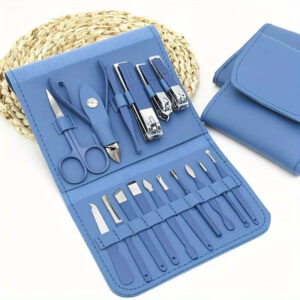
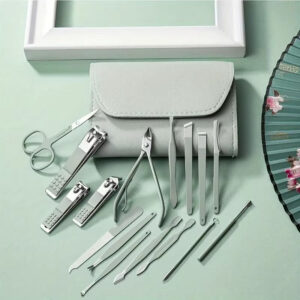
16pcs Professional Nail Clippers and Cuticle Nippers Set.

This isn’t just a few clippers thrown together. This set is divided into three main categories: facial care, hand care, and foot care.

  1. The Heavy Hitters: Nail & Toenail Clippers

The kit features three different sizes of clippers. Why three? Because using the same small clipper for your tough thumbnails and delicate fingernails is a recipe for a bad trim.

  • Large Clipper: Built with more leverage for those thicker toenails.
  • Medium Clipper: Your everyday go-to for fingernails.
  • Diagonal Clipper: This is the unsung hero. It’s angled specifically to get into the corners of your nails to prevent ingrown or to snip off a hangnail without tearing the skin.
  1. Precision Tools: Cuticle Nippers & Scissors

If you’ve ever tried to trim a cuticle with a regular clipper, you know the pain of “the nick.” The professional-grade cuticle nipper in this set allows for a high degree of precision. It’s spring-loaded, which means you have total control. Pair that with the fine-tipped grooming scissors perfect for trimming unruly eyebrows or nose hairs and you’ve got a full salon setup in the palm of your hand.

  1. Facial & Detail Tools

This is where the kit goes above and beyond. You’ll find:

  • Tweezers: Sturdy, slanted tips that actually grip the hair instead of just sliding off it.
  • Ear Picks: Two different styles for gentle cleaning.
  • Acne Needles/Loop Extractors: For those who know how to handle a blemish properly without causing scarring.
  1. Smoothing & Finishing

A nail isn’t finished until it’s smooth. The kit includes a high-grit metal file that doesn’t wear down like those disposable emery boards. There are also various “pushers” and “shovels” used to clean under the nail bed and push back cuticles, giving you that clean, elongated nail look.

  1. The Face Savers It’s not just about nails. This kit handles the “above the neck” stuff too: Tweezers that actually work: We’ve all used those cheap tweezers that just slide off the hair. These have a solid grip.

The Beauty Scissors: Perfect for trimming a mustache or those wild eyebrow hairs.

Ear Picks: It comes with two styles (scoop and spiral) for a much safer way to clean your ears than jamming a Q-tip in there.

The Big Guy: This is for those stubborn toenails that regular clippers just bend against. It’s got the leverage to get the job done without you breaking a sweat.

The Standard Clipper: Your everyday tool for fingernails.

The Angled/Diagonal Clipper: This is the secret weapon. If you’ve ever had an ingrown nail or a painful hangnail, this angled edge lets you snip it right at the source without tearing your skin.

Why Quality Matters (And Why Your Skin Will Thank You)

A lot of cheap kits use low-grade metals that rust after two months or, worse, get dull. A dull blade doesn’t “cut” your nail; it crushes it. This leads to splitting, peeling, and jagged edges.

The tools in this set are crafted from stainless steel with a matte finish. This provides a better grip (no more clippers flying out of your hand across the bathroom) and ensures the blades stay sharp for years. Plus, the matte coating is much easier to sanitize—a quick wipe with some rubbing alcohol and you’re good to go.

The “Human” Benefit: Why You Need This

Beyond the technical specs, there’s a psychological benefit to owning a kit like this. There is a specific kind of “adulting” satisfaction that comes from having a dedicated place for your tools.

Instead of frantic searching, you have a ritual. Sunday night rolls around, you grab your kit, and you take ten minutes to reset. It’s self-care that isn’t fluffy or over-the-top—it’s just practical maintenance that makes you feel more confident on Monday morning.

The Perfect Gift?

The Clippers: There are three different ones. A big one for those tough toenails, a medium one for your fingers, and an angled one. That angled one is a life-saver for getting into the corners of your nails without hurting yourself.

The Face Stuff: It’s got a solid pair of tweezers (that actually grip the hair!), tiny scissors for trimming eyebrows or a mustache, and even some ear picks.

The Extras: It also has tools for clearing out blackheads or pushing back your cuticles. If you’ve ever wanted your hands to look like you just came from a professional salon, these are the tools you need.

Final Thoughts

At the end of the day, grooming is about more than just looking good; it’s about hygiene and health. Properly trimmed nails and clean skin prevent infections and keep you feeling sharp. This 16-piece set takes the guesswork out of it.

It’s sleek, it’s sharp (literally), and it’s organized. Stop settling for dull, mismatched tools and give your grooming routine the upgrade it deserves. Your hands and your sanity will thank you.

For BUY

Understand the development of Fashion Industry in Pakistan.

Understand the development of Fashion Industry in Pakistan.
Pakistan is the world’s 4th largest producer and 3rd largest consumer of cotton. Because of its plentiful, indigenous cotton supply, the textile industry is central to the Pakistani economy and is both a source of employment and a source of exports. Pakistan’s industrialization began in the 1950s with the textile industry at its center. The Textile and Clothing Industry has been the main driver of the economy for the last 50 years in terms of foreign currency earnings and jobs creation. The Textile and Clothing Industry will continue to be an important engine for future growth of the economy; there is no alternative industry or service sector that has the potential to benefit the economy with foreign currency earnings and new job creation. Pakistani fashion industry has great potential which can earn huge foreign exchange through export of fashion industry products if it succeeds to catch the attention of western buyers. These views were expressed by the head of Italian delegation Ms Stella Maria Novarino, Ms Diana Battaggia and UNIDO representatives speaking at a moot here at the Lahore Chamber of Commerce and Industry (LCCI). They said the world was going to other regional countries to buy handmade embroidery and products for fashion industry despite the fact that Pakistan has far better expertise. Members of Italian UNIDO delegation Ms Danielle Doujour, Ms Elisabetta Latanzio Illy, Federico Barassi, Dino Fortunato also spoke on the occasion. LCCI Senior Vice President Khawaja Shahzad Nasir, Vice President Faheem-ur-Rehman Saigal, Convener LCCI Standing Committee on Women Business Development AasiaSaail Khan represented the business community besides veteran businessman Rehmatullah Javeed. Ms Stella Maria Novarino said that all those women are not just workers but artists who are doing embroidery, stitching and other related works. “We also want to change the perception of Pakistan in the world through Pakistani finest quality work and art and want to highlight the talent of Pakistani women that is fit for international fashion Industry”, She added. She said that Pakistani women entrepreneurs have everything that Italian Fashion Company needs. There is no reason not to work with them. Faheem-ur-Rehman Saigal said that fashion industry of Pakistan can get a good share from the international fashion market worth billions of dollars. He said that from 220 million population of Pakistan, women comprise of more than 50 percent of it. Through introducing new projects, a large number of populations can be benefitted and contribute in national economy. He said that Pakistan’s Fashion designing and clothing industry has become an important dimension for national economy because of its export potential. He said that decision makers should realis its significance in view of its huge potential for future expansion and give all possible facilities.
Fabric Scissors: This kind of scissor is a bit heavy than a paper scissors. Scissors also have a long blade which is ideal for cutting fabricseven for cutting several layers of material at the same time.
Paper Scissors: This kind of scissor is lighter in weight than fabric scissor. This scissor should strictly be used for cutting paper because changing the material for cutting can damage the blade.
Beauty sector:
Beauty sector involves self-adornment products like makeup, cosmetics related to skin, hair and other related accessories. Recent years have witnessed a rapid increase in peoples’ inclination towards using such products for personal grooming. At the same time this sector has made a profound place in fashion industry. Colour Theory Color theory is a set of rules that combines creativity and science.


Color theory sets the fundamental guidelines around color combinations and harmony. Designers and artists rely on color theory to make the correct choices for their projects but they are not the only ones who use it. Most people unknowingly make everyday decisions based on color theory and color harmony. Understanding the guidelines of color theory can help you in so many areas of life, from your business to your clothes.
Importance of Colour Theory in drawing and Design.
We live in a highly visual world and it is impossible to master the art of visual communication without a good grasp of color theory. The colors in your design need to be purposeful and have meaning in their use. Color is helpful in communicating your message because it draws attention, sets the tone of the message, and guides the eye where it needs to go. It presents a sense of direction and recognition that people can identify and relate to. Colours are everywhere. In our daily lives, we are constantly surrounded by colours. These colours can influence our emotions i.e. how we feel about Color theory is a body of practical guidance to color mixing and the visual impacts of specific color combinations. Do You Know? Interesting Information Your eye can see different colors because a part of your eye called the retina is sensitive to different wavelengths of light. someone. Marketers have been using the psychology of colors for decades and often draw on them to gain an emotional response from the customer.

Scope of Fashion designing on domestic level.

Scope of Fashion designing on domestic level.
Fashion designing is the science of geometry, color and drapery all rolled into one. It is associated with creating designs for menswear, women wear, teen fashion wear and extends to accessories like jewelry, and footwear also. Fashion designing is an intellectually satisfying and lucrative profession today. As the domestic demand for ready to wear increase, the fashion industry today pivots on the evolving dynamism and energy of the international design world. Creative and innovative Fashion Designers rise to become Global Brand Icons, Media Personalities, Industry Stalwarts or ultimately, Celebrated Images symbolizing the remarkable look, feel and attributes to the era. The fashion industry is a product of the modern age. Prior to the mid-19th century, virtually all clothing was handmade for individuals, either as home production or on order from dressmakers and tailors. By the beginning of the 20th century,with the rise of new technologies such as the sewing machine, the rise of global capitalism and the development of the factory system of production, and the proliferation of retail outlets such as department stores, clothing had increasingly come to be massproduced in standard sizes and sold at fixed prices. Although the fashion industry developed first in Europe and America, today it is an international and highly globalized industry, with clothing often designed in one country, manufactured in another, and sold in a third.
 • Fashion Designing as a field of study: 
                                                                           Fashion Designing is one of the upcoming career options in today’s world and it is becoming famous day by day among the people with creative minds. It is glamorous, appealing, and exciting career option. With this degree students have number of choices in front of them. The fashion designers have varied options including designing, research, cloth production, textile designing, etc.
• Who Is a Fashion Designer?
A fashion designer is a person who studies fashion trends, sketches designs, picks fabrics and oversees the general production of clothing and accessories. Most people often mistaken tailoring/dress making to fashion designing, although they work hand in hand, there is a significant difference between them.
• Skills Required to Become a Fashion Designer 
 Creative Skills
 Good eye for materials
Business skills O
 Strong visualization skills
 Information about current fashion trends
 Drawing and sketching skills
Soft skills
• Product promoters: 
                          There are many other options as well for instance you can also work with Film production units as TV/Film fashion program producers/costume designers etc. Invite guest speaker from garment industry to address the students to highlight scope and importance of Fashion.
What Is Pret-A-Porter Exactly.
                                                          Pret-a-Porter fashion, also known as ready – to-wear fashion, describes the ready -made, ie not tailor -made, fashion collections of designers and labels. Ready -made fashion is one that we find in retail in various, fixed. sizes on the shelves. the designer’s Pret-a-Porter collections are admired and celebrated. For the designers themselves, the Pret-a-Porter collections are extremely important in addition to haute couture, because the ready-to-wear fashion boosts the marketing of designers enormously.
3.2Haute Couture:
Haute couture is defined as the high end or luxurious fashion that majorly fulfills the demands of “high society” of fashion collections by designers. The term comes from France, Haute means high end and couture means fashionand refers to the upscale designs of fashion designers from the top tier. The French fashion association sets rules and specifications so that the ranks of Couturiers remain exclusive.
4. Evolution of Fashion 
4.1 Know the evolution of Fashion (mid 80’s – till date)
                                                         Fashion is a universal subject, a language understood and spoken by many. When we look back over the last 100 years, the change and influence fashion has seen has been exponential. Decade after decade, new trends have been introduced, themselves heavily influenced by pop culture, political attitudes and inspiring style icons of the time. It is a mode of expression for so many and considered a necessity by others. To be ‘fashionable’ was very much associated with wealth in bygone years but as we entered into the glittering Great Gatsby era of the 1920s, fashion became liberated as Coco Chanel took to the throne (in a fashion sense, of course.) She popularized so many pivotal fashion trends that we still wear today including the little black dress, espadrilles and costume jeweler but she was also a driving force behind this liberation movement, an advocate for casual dressing as corsets were removed and trousers for women became the new wardrobe staple. By the 1950s, the French designer, Christian Dior, had introduced us to one of fashion’s most widely-worn trends – the pencil skirt. A popular choice for the First Lady of the time, Jackie Kennedy.In what became known as the ‘rebellious era’, the 1960s was a great contrast to previous decades. It was a time of great upheaval, both politically and creatively and is synonymous with a much shorter hemline as governed by British designer, Mary Quant presented and her mini skirt. Mod fashion also came into play, with bold geometric shapes, bright primary colours and psychedelic prints introduced by designer, Emilio Pucci. It was the decade of experimentation and non-conformity, which carried on through to the 1970s. As hemlines began to get longer and trousers grew tighter, bohemian dressing took center stage – literally, in the case of style icon, Joni Mitchell. Long, flowing skirts, the DVF wrap dress and embroidered, peasant style clothing became increasingly popular, advocated by stores including Biba and Laura Ashley. The 1970s is a perfect example of the cyclicality in fashion trends. Last summer, more than 40 years on, we have seen the off-shoulder Bardot and embroidery trends taking over our favorite high street stores once more in a revival of the most popular looks from the decade. Today, the fashion industry is a highly reputable, competitive and wonderfully influential business. Our searing dedication and interest in the biannual shows at fashion week or excitement following the arrival of new season stock in Topshop has not wavered. Our commitment to fashion and looking stylish still remains original and passionate, more than 100 years on.
 Activity:  Visit any cultural museum to observe the evolution of Fashion Designing

Introduction to Fashion Designing and Its Types

Introduction to Fashion Designing and Its Types. 
Fashion is a form of self-expression and autonomy at a particular period and place and in a specific context, of clothing, footwear, lifestyle, accessories, makeup, hairstyle, and body posture. The term implies a look defined by the fashion industry as that which is trending. Fashion is also a source of art, allowing people to display their unique tastes and styling. Different designers are influenced by outside stimuli and reflect this inspiration in their works.Fashion is unique, selffulfilling and may be a part of someone’s identity.
Different Categories of Fashion
 • Garments
 • Lifestyle
 • Beauty Sector
 Garments 
Different categories of garment are as follows:
 1. Casual Wear 
 2. Formal Wear
 3. Sports Wear 
1. Casual Wear
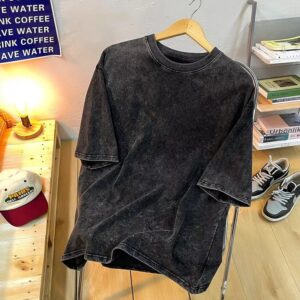
Casual wear is informal dress code that is comfortable and relaxing to be worn. They mostly do not come with any kind of embellishment or any sort of adornments. It may include T-shirts, trousers, jeans and so on.
2. Formal Wear Point to Ponder!
Formal wear garments are mostly worn at special Do You Know about occasions. They tend to be highly embellished with Ballerina and Tea luxury fabrics like silks, chiffons, satin, velvets, organza Gowns? You can take etc. They mostly include long flowy gowns with help from internet to interesting cut lines. find out!
3. Sports Wear
Sportswear is categorised as active wear worn during a sport or doing a physical exercise. The design of the garment depends upon the kind of sport you are doing. While designing sports wear it is important to keep in mind that it allows maximum comfort and flexible to body so you can do the sport with ease.
Lifestyle:
Lifestyle is defined as a way or style of living. Lifestyle may be the interests, behaviors, work, activities and opinions of an individual, group or culture. Lifestyle is mostly adopted with reference to the cultural and environmental context. In general the way a person dresses up, sets up his living spaces and his overall way of living defines his lifestyle.
Beauty sector:
Beauty sector involves self-adornment products like makeup, cosmetics related to skin, hair and other related accessories. Recent years have witnessed a rapid increase in peoples’ inclination towards using such products for personal grooming. At the same time this sector has made a profound place in fashion industry.
Tools and equipment used for fashion designing Tools and equipment are significantly important for a person who is supposed to produce a creative work. A fashion designer cannot work if he does not have his tools and equipment in hand. Enlist below are the important tools of fashion design without which design process cannot be carried out and executed.
1. Scissors:
 It is an instrument used for cutting of fabric or paper etc.
Scissors are of different types and used for different purposes:
Fabric Scissors: This kind of scissor is a bit heavy than a paper scissors. Scissors also have a long blade which is ideal for cutting fabrics; even for cutting several layers of material at the same time.
 Paper Scissors: This kind of scissor is lighter in weight than fabric scissor. This scissor should strictly be used for cutting paper because changing the material for cutting can damage the blade.
2. Tailor’s Chalk: Chalk is an essential tool for marking fabrics. It is mainly used to mark the measurements on fabric. The markings are not permanent can be easily removed or washed when not needed.
3. Tape Measure: 
A Fashion Designer usually keeps a measuring tape with him during his work. This equipment is essential for fashion tools as it will allow creating a perfect measurements of the garments.
4. Dressmaker Pin Tools: 
These fashion tools are a short straight, stiff piece of wire that is used for fastening pieces of fabrics or other materials together. The Dressmaker pin is helpful in joining the fabric pieces together before stitching as they allow fabric pieces to stay in place and make the process convenient to get completed.
 5. An Adjustable Dressmaker Mannequins:
 Using an adjustable mannequins will allow a fashion designer to make clothes without worrying about the sizes. They enable the designer to check and re check the measurements of the garment to get an accurately stitched product. It will also be a great help for getting the correct positions of buttons, pockets, fasteners, hooks etc.
6. Calico
A white or off white cotton fabric used to make test garments. This is a very important step to make toils (test garments) before the final garment stitching as it will allow to identify and resolve any mistakes that can be corrected while stitching the garment on true fabric.
7. Sketch book and Trace Roll Paper: 
The Sketch book and Trace Roll Paper are is a must-have fashion tool as it is used for creating sketches and detail work. Designers must have a skill for drawing; that is why design and tracing paper is crucial.
 8. Sewing Machine:
The sewing machine is the one used for sewing fabrics and other materials. A sewing machine plays a vital role in the fashion design industry. It is the tool for making a variety of plain or patterned stitches.
9. Japanese Scale:
 It is a scale used for measuring length and width of the fabric. It consists of smallest readings of 0.5 cm which help in accurate measurements.
10.French Curve:
A tool used in drafting a pattern manually and design to draw smooth curves. It is composed of several different curves used to create curves at different points of a garment.
2. Importance of fashion in everyday life :
On a larger scale, fashion is important because it represents our history and helps to tell the story of the world. Clothes help to keep people ready for whatever they may face in life but fashion keeps up with the current crazes and changes that we all face so that we’re ready for whatever life throws our way.Fashion design is the art of the application of design and aesthetics or natural beauty to clothing and accessories. Fashion design is influenced by cultural and social latitudes, and has varied over time and place. Fashion designers work in a number of ways in designing clothing and accessories.
Fashion in daily life:
 Fashion is always considered the important part of our life. It has been followed from the ancient time but as time passed, the fashion trends changed. In the olden times, fashion was regarded as the possession for the high-class people but, as time and thinking of people have changed, the view about fashion also changed.In today’s world fashion is accepted by people of all class and culture. Fashion is a word, which is recognized by all people of the society. Various culture and tradition has also accepted fashion in its own way. People who want to be up to date with the latest fashion follow various fashion magazines and media. Fashion designers work hard to fulfill the wish of all people from various backgrounds. Therefore, fashion is very important in our life. Hence, many fashion designers work hard to create new designs, which can attract people and accept them.
 2.2 Common Accessories in Fashion:
                                              Fashion is incomplete without accessories. Various accessories such as designer belts, clutch, bags, jewelry, hair accessories etc. enhance your fashionable clothes. The latest fashion designers and stylists use various types of accessories to enhance and complement the design of the outfit in order to improve its look.
2.3 Fashion Values and Beliefs:
                                Fashion values and beliefs totally differ according to the perspective about fashion. A true fashion designer values the beliefs of the people and designs clothes according to their taste. There are various values associated with fashion in different culture and designers need to incorporate them accordingly in their designs. Designers should also take care of the beliefs and cultural values of people associated with fashion too.
 2.4 Fashion Online:
                        As this is an internet world, fashion can be easily located online. There are various websites, which offer fashion online and can be browsed as well as ordered from the comfort of the house. The latest trends can be followed through internet too. Online fashion gives you a broad view about not only national, but also international fashion trends.
What is the Curated Closet?

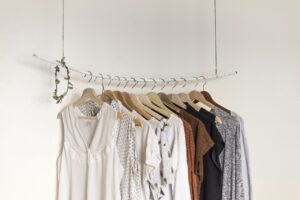
The Curated Closet refers to a personalized wardrobe designed to reflect an individual’s unique style and life needs. This approach emphasizes confidence and inspiration, avoiding trends and generic wardrobe essentials that fail to cater to specific lifestyles.
Introduction: This chapter narrates the author’s journey from a cluttered, unfulfilling wardrobe to a more curated and functional one. Living in a small apartment in London, the author repeatedly faced outfit dilemmas, despite an overflowing closet. The Curated Closet is a step-by-step process for defining your personal style, editing your existing wardrobe, and making strategic, fulfilling purchases. Think of yourself as the curator of a museum. A curator doesn’t just collect every piece of art they see; they carefully select pieces that fit a specific vision, tell a cohesive story, and bring value to the collection. Growing up with a keen interest in fashion, the author spent considerable time and money on clothes, yet struggled to create appealing outfits. Your wardrobe should be no different. It’s a curated collection of pieces that are:
Intentional:  The phrase implies a thoughtful selection of clothing that reflects a personal style and is well-chosen rather than just a large collection of random items.
Cohesive: All your pieces work together to create a multitude of outfits.
• Functional: Your closet supports your actual lifestyle.
• Authentic: It reflects your unique personality, not just passing trends.
Clothing Blunder.
The author attributes the wardrobe issues to several factors: – Limited financial resources as a student led to shopping at fast-fashion retailers and impulse buying. – A misguided belief that great style equated to following every trend resulted in a disjointed collection of clothes. – Quick-fix shopping habits, fueled by sales and discounts, neglected the importance of quality and personal style. Over time, dissatisfaction with the clutter and a lack of personal expression prompted the author to rethink her approach. Inspired by style icons who forged their unique looks, the author aimed to cultivate her personal style and develop a replicable system for others.

The Fundamentals of a Curated Closet
The structure of a designed closet rests on three main bases:

1. Discover Your Personal Style:
This is the foundational step. Before you buy or sell anything, you need to be clear about what you’re working to achieve.

How to do it: Create a style idea board (Pinterest is perfect for this). Share each picture you’re attached to without overthinking it. After you have 50-100 pins, step back and review. What colors, designs, fabrics, and themes keep coming up? Is it classic blazers, flowing romantic dresses, or sleek sneakers? Give your style a name (or a few!) to firm up the idea.

2. Conduct a brutal closet check.
You can’t build a new outfit on a dirty foundation. This step is about honestly reviewing what you already own.

How to do it: Empty your storage space. Try on everything.
For each item, ask:

Do I love how I look and feel in this? (Does it fit well? Is it flattering?)

Does it fit my present lifestyle? (Do you have places to wear it?)

Does it align with my style vision? (Does it fit with the design you’re building?)

Group stuff into Keep, Give or Sell, and Maybe groups. Be honest and harsh!
3. Shop with purpose and plans.
This is where the true magic happens. Shopping for a designed closet is the opposite of buying without thinking. It’s a targeted task.
How to do it: After the review, you’ll find the gaps in your clothes. Maybe you have five party dresses but no trendy tops for weekend suppers. Create a shopping list of what you need. This list is a barrier against trendy intrusions and deals that don’t serve you.

Research and Development:
To achieve this, the author conducted extensive research, reading fashion literature and testing techniques on herself and others. She also started a blog to share insights and refine her ideas based on feedback.
Example Key Point: Personalized style trumps trends.
Example: Imagine standing in front of your closet filled with clothes you bought on impulse. You see items that may have been trendy at one time but don’t resonate with who you are. Instead of feeling inspired, you feel overwhelmed and confused. Now, picture taking the time to curate your wardrobe, choosing each piece meticulously to reflect your personality and lifestyle. You reach for a tailored blazer that complements your favorite jeans, knowing it expresses your unique aesthetic. As you dress, the confidence radiates because your outfit tells a story that’s entirely yours, ignoring fleeting trends and embracing the joy of a curated closet.
The 10-Item Capsule Challenge:
Your Initial Step:
Feeling inspired yet a bit overwhelmed? Begin with a simple step using this amazing exercise from The Curated Closet:

The challenge is to wear only ten essential pieces from your closet such as dresses, shirts, and bottoms, for two weeks without wearing any shoes, accessories, or outerwear.

Why it is effective: This forces you to get creative, shows your most-loved items, and displays what you’re truly missing. It’s a lightning-fast way to start your curation task.

The Toolbox.
The resulting book serves as a toolkit filled with strategies and exercises aimed at helping individuals build a functional and expressive wardrobe. Achieving a curated closet is portrayed as an enjoyable, ongoing journey rather than a quick fix, emphasizing the long-term value of understanding personal style and fostering self-expression through clothing.


A Curated Closet’s Life-Changing Benefits:
Why make all this effort? The benefits are more than just a clean closet:
The End of “I Have Nothing to Put on”: With every piece becoming a winner, getting dressed becomes fun, not a chore.

Save Money Long-Term: You stop spending money on cheap, modern clothing that you’ll wear once. You invest in products that you’ll love for years.
Effortless Morning Schedules: A uniform style means everything mixes and matches. You can create many outfits from a smaller number of pieces.
Increased Confidence: When your clothes are a true reflection of you, you project honesty and confidence. You feel put-together every single day.
Make Earth-Friendly Choices: Buying less and choosing well-made, timeless pieces is a powerful way to minimize your fashion environmental impact.
Final Thoughts:
It’s all about the journey, not just the destination! Creating a curated closet takes time and patience. It’s a continuous journey of honing your style, looking after your wardrobe, and thoughtfully adding pieces as you grow. The aim isn’t to be perfect. The aim is to create a wardrobe that truly reflects who you are most genuinely and delightfully. So, open that closet door not with dread, but with the excitement of a curator eager to create a masterpiece.

The 10 Most Popular Winter Fashion Trends 2025:

Winter is finally here. It means warm nights and hot cocoa, and of course a new style. Every year winter fashion changes. Mix comfort and style for this year’s fashion You will see bold choices, eco-friendly choices in the fall and nostalgic references.

1. Oversized Coats
A. Description of the oversized coat trend
B. Examples of popular styles and colors
C. Tips on how to style an oversized coat
2. Chunky Knit Sweaters
A. Explanation of the chunky knit sweater trend
B. Suggestions for layering with other pieces
C. Ideas for accessorizing chunky knit sweaters
3. Leather Pants
A. Overview of the leather pants trend
B. Advice on finding the perfect fit
C. Recommendations for pairing leather pants with different tops
4. Faux Fur Accessories
A. Description of the faux fur accessory trend
B. List of popular faux fur items (hats, scarves, bags, etc.)
C. Tips on incorporating faux fur into different outfits
5. Velvet Dresses
A. Explanation of the velvet dress trend
B. Suggestions for styling velvet dresses for different occasions
C. Advice on choosing the right accessories to complement a velvet dress
6. Statement Boots
A. Description of the statement boot trend
B. Examples of popular boot styles (over-the-knee, combat, etc.)
C. Ideas for making a statement with boots
7. Plaid Prints
A. Overview of the plaid print trend
B. Suggestions for incorporating plaid into different outfits
C. Tips on mixing and matching different plaid prints
8. Puffer Jackets
A. Explanation of the puffer jacket trend
B. List of popular colors and styles
C. Ideas for staying warm and stylish in a puffer jacket
9. Metallic Accents
A. Description of the metallic accent trend
B. Suggestions for adding metallic touches to an outfit
C. Tips on balancing metallic pieces with other elements